
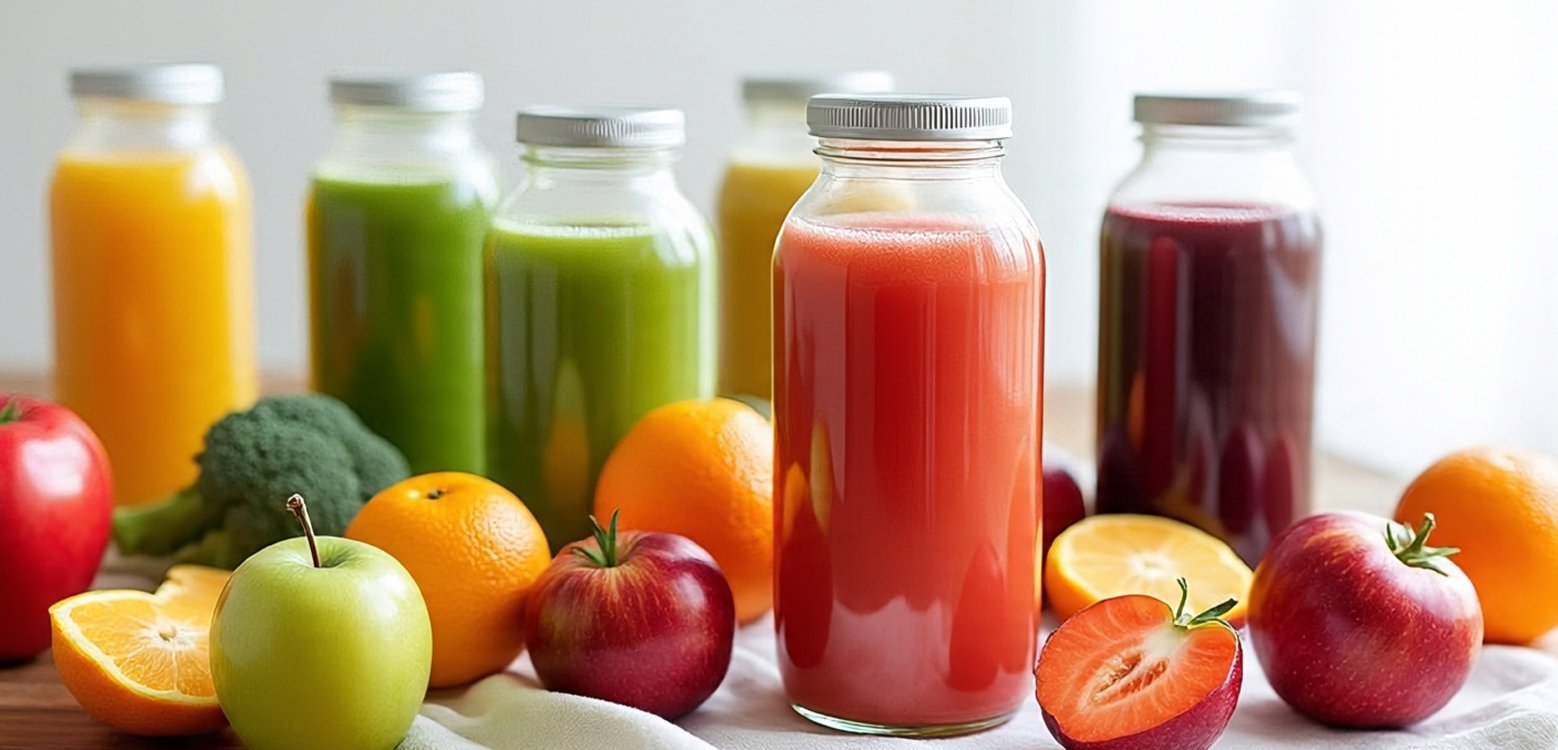
A daily glass of 100% fruit juice or a smoothie may help improve more than just your fruit intake and vitamin levels. In a small four-week trial, participants who added one glass to a healthier diet showed significantly lower depression scores, therefore hinting that a simple dietary change could also support mental well-being.
Drinking a daily glass of 100% fruit juice or a smoothie as part of the UK’s official 5-a-day guidance may help support mental health, according to promising new research from Newcastle University in the UK.
How Did Fruit Juice Improve Mood in The Trial?
In a randomized controlled trial, adults who typically ate relatively little fruit and vegetables received targeted support to increase their overall intake. Some participants were also specifically asked to include one glass of fruit juice or a smoothie each day as they worked toward the 5-a-day target.
After four weeks, both intervention groups successfully increased the amount of fruit and vegetables they consumed. However, participants who included fruit juice or a smoothie also reported notably lower depression scores than controls. The peer-reviewed findings were published in the British Journal of Nutrition and funded by the Fruit Juice Science Centre. Researchers say the results add to growing evidence that relatively simple and practical dietary changes may have measurable benefits for mental health.
Dr. Courtney Neal, who completed the study at Newcastle University and is now at the University of Liverpool, said: “While most people know eating 5-a-day can be good for your health, many people struggle to achieve it.” “Our trial showed that when people with low fruit and vegetable intake were provided with targeted financial and educational support to address common barriers, they were able to make meaningful changes to their diet. We found that simple, cost-effective solutions, like drinking a small glass of 100% fruit juice or a smoothie daily, could help people reach their 5-a-day, with potential benefits for mental well-being.”
Why Do So Few People Reach The 5-A-Day Goal?
Eating recommended amounts of whole fruits and vegetables has been consistently associated with a lower risk of chronic disease and better long-term physical health. Despite those clear benefits, fewer than 1 in 5, or 17%, of UK adults and only 1 in 10 teenagers currently meet the 5-a-day recommendation. Everyone who took part in the 4-week trial ate two or fewer portions of fruit and vegetables per day when the study began. Participants received support designed to help them increase their intake to 5-a-day without feeling overwhelmed.
Some participants were instructed to meet that target using whole fruits and vegetables alone. Others increased their intake of whole fruits and vegetables while also drinking one glass of fruit juice or a smoothie each day as a convenient top-up.
What Happened to Depression and Fiber Intake?
Researchers evaluated changes in mood using validated questionnaires that measure symptoms of anxiety and depression, including PHQ-9 and GAD-7. Participants who consumed fruit juice and smoothies alongside whole fruit had lower depression scores than the control group.
Their scores were 2.52 points lower on a 27-point scale, a difference researchers described as modest but statistically significant and clinically interesting.
The fruit juice and smoothie group had an adjusted mean depression score of 2.93 compared to 5.45 in the control group that continued their usual diet.
Dietary recalls completed during the study also suggested that both intervention groups increased their daily fiber intake by an estimated 8 to 10 grams. That important finding indicates that including juice did not stop participants from adding other fiber-rich fruits and vegetables to their diets.
Despite common concerns about the sugar content of fruit juice, researchers found no adverse effects on metabolic health markers after four weeks among those who consumed juice as part of the intervention. Dr. Oliver Shannon, Lecturer in Nutrition and Ageing at Newcastle University and senior author, said: “Given the ongoing cost of living pressures in the UK, the price of fresh produce is often a barrier. Our study shows that drinking a daily glass of fruit juice or a smoothie could be part of the solution.”
“The finding that fruit juice drinkers had reduced depression scores is promising and worthy of further exploration, particularly in individuals experiencing poor mental well-being. It backs up studies which report improved brain blood flow and cognitive function after people drink citrus juices.”
How Was This Small Study Conducted?
The 4-week trial included 42 people who consumed two or fewer portions of fruit and vegetables per day at the start. Participants were randomly assigned to one of three equal groups of 14 people.
The first group served as controls and were asked to continue eating their usual diet without any changes. A second group received support to increase consumption to 5-a-day using whole fruits and vegetables only.The remaining 14 participants were also encouraged to reach 5-a-day through whole fruits and vegetables, but they additionally consumed one glass of fruit juice or a smoothie each day. All three groups received £10 per week, and the two intervention groups were also provided with educational materials to help them change.
Q&A: Quick Answers About Fruit Juice and Mood
Q: Can a glass of fruit juice really lower depression scores?
A: In this small Newcastle trial, the juice and smoothie group scored 2.52 points lower on the PHQ-9 depression scale than controls after four weeks, suggesting a modest mood benefit alongside higher fruit intake.
Q: Does drinking fruit juice stop you eating whole fruit?
A: No, dietary recalls showed both groups increased fiber by 8-10g daily, indicating that juice acted as an addition to whole fruits and vegetables, not a replacement.
Frequently Asked Questions [FAQ]
1. Is 100% fruit juice healthy despite its sugar content?
In this 4-week study, researchers found no adverse effects on metabolic health markers when one small glass of 100% juice was consumed daily as part of a balanced 5-a-day diet.
2. How much fruit juice was used to improve mood?
Participants consumed one small glass, typically 150ml as per UK guidance, of 100% fruit juice or a smoothie daily alongside whole fruits and vegetables to reach 5-a-day.
3. Why might fruit juice help mental well-being?
Researchers suggest citrus juices may improve brain blood flow and provide flavonoids and vitamins that support brain function, though larger studies are needed to confirm the exact mechanism.
4. Can fruit juice help you reach 5-a-day on a budget?
Yes, authors note that during cost of living pressures, a daily glass of juice is a simple, cost-effective, and practical way to help low fruit consumers reach their 5-a-day target.
Final Word: While small, this trial suggests a daily glass of 100% fruit juice could be a simple, affordable stepping stone to better diet and potentially better mood for people who struggle to eat enough fruit.
Disclaimer: This article is for informational purposes only and does not constitute medical advice. Consult your healthcare provider for mental health support.