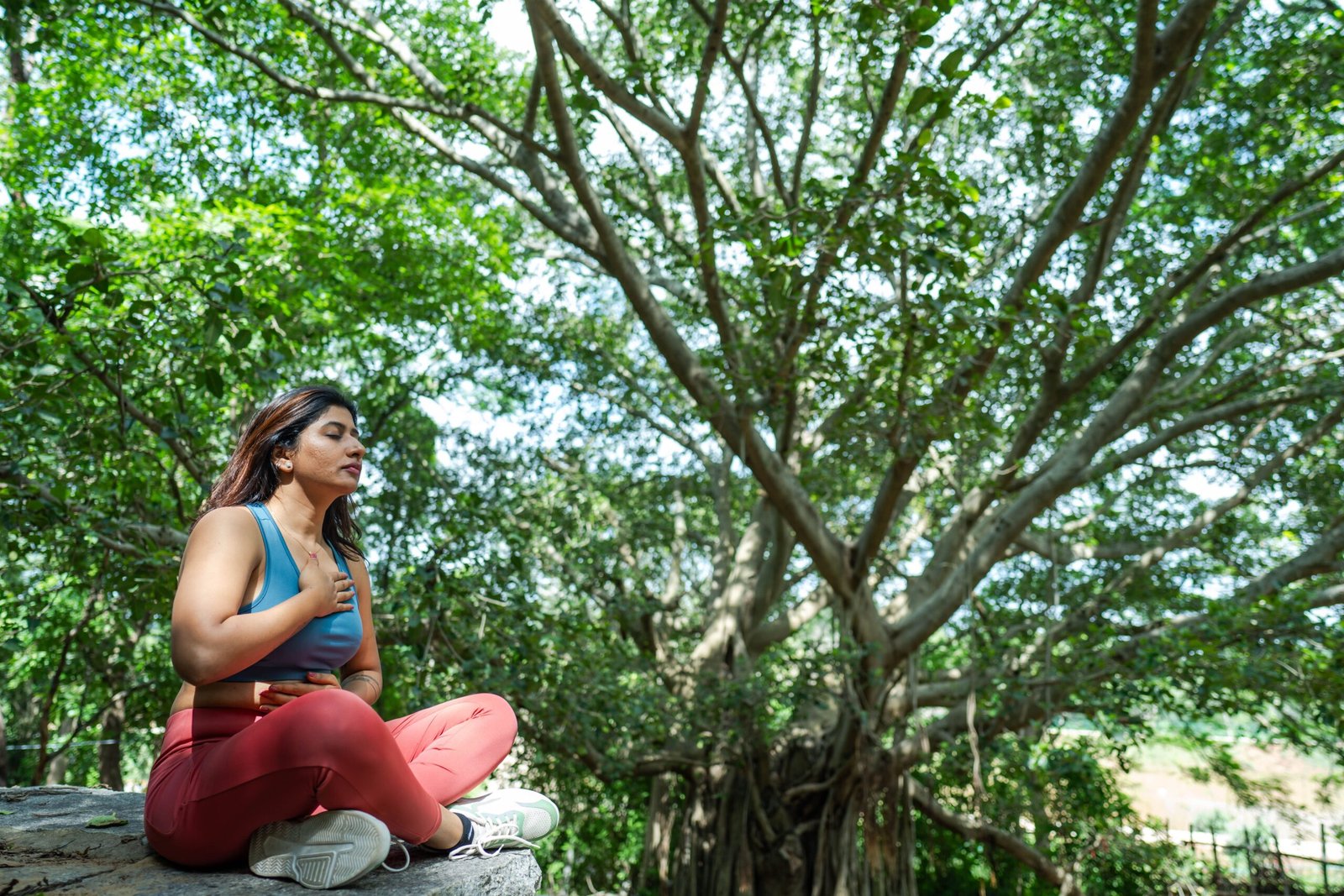

Knee pain is becoming extremely common today. Even young adults in their 40s suffer from knee pain regularly. This can happen due to injuries like sprains, ligament damage, and repetitive strain. Medical conditions like arthritis, gout, and infections also cause knee problems.
All these conditions lead to swelling, stiffness, instability, or clicking sounds. Some people might need medication or surgery to improve knee strength. Other than these, yoga too can benefit your knees significantly. Yoga for knees focuses on strengthening supporting muscles, improving flexibility and balance, and reducing injury risk.
When you practice yoga regularly, it helps strengthen knees and eventually improves mobility. Therefore, consistent practice supports long-term joint health.
Chair Pose (Utkatasana) – Builds Quads and Glutes
Stand with feet hip-width apart, bend knees as if sitting in chair until thighs are almost parallel to floor. Keep knees over ankles, extend arms overhead, engage core, and hold for 5-10 breaths.
This pose helps strengthen quadriceps and glutes, shifting weight to hips, which eases knee pressure. Repeat three times with rests between. This improves your stability significantly.
Warrior II (Virabhadrasana II) – Improves Alignment and Load Bearing
Keep feet wide, turn right foot out 90 degrees, bend right knee over ankle while left leg stays straight. Extend arms parallel to floor, looking over front hand, and hold for 5 breaths each side.
It strengthens quads, inner thighs, and hips, preventing inward knee drift for better alignment. These dynamic knee bends help activate supporting muscles effectively.
Triangle Pose (Trikonasana) – Tones Quads and Stretches Hamstrings
Keep feet wide apart, right foot turned out, reach right hand toward shin or floor while keeping left arm upward. Keep both legs engaged, hold for 5 breaths, then switch sides.
It helps tone inner quads and stretch hamstrings, improving knee stability and flexibility around joint. Moreover, it enhances overall leg balance.
Bridge Pose (Setu Bandhasana) – Activates Posterior Chain
Lie on back, keeping knees bent and feet hip-width apart. Press feet down to lift hips and clasp hands underneath if possible. Hold for 5-8 breaths and repeat 3 times.
This pose activates glutes and hamstrings to control knee movement. It reduces absorbing stress and pain by strengthening posterior chain muscles.
Garland Pose (Malasana) – Deep Squat For Hip and Ankle Mobility
Keep feet wide with toes out, squat low with heels down, press elbows on knees and keep palms near chest. Hold for 5 breaths.
This deep squat stretches ankles and hips, improving knee-supporting muscles safely. Furthermore, it opens up lower body for better mobility.
Tree Pose (Vrikshasana) – Improves Balance and Stabilizers
Stand on right leg and place left foot on inner right thigh. Keep hands in prayer or overhead and gaze fixed in front. Hold for 5 breaths each side.
Balancing engages all knee stabilizers, improving body awareness and tones muscle for stability. Therefore, it prevents falls and improves joint control.
High Lunge (Anjaneyasana Variation) – Mimics Functional Movements
Step left foot back on ball of foot, bend right knee to 90 degrees over ankle and keep arms overhead. Hold or pulse knee for 5 breaths each side.
This pose challenges quads and core, mimicking functional movements to improve knee balance. Additionally, it builds strength for daily activities like climbing stairs.
Goddess Pose (Utkata Konasana) – Strengthens Adductors and Abductors
Keep feet wide with toes out, bend knees over ankles, and keep arms in prayer. Hold for 5 breaths, and lift heels optionally.
This simultaneously strengthens both legs’ adductors and abductors, improving knee alignment under load. Consequently, it protects knees during wide-stance movements.
Analysis: How Yoga Protects Knees Without Surgery
Yoga strengthens muscles that support knee joint rather than putting direct pressure on it. Stronger quadriceps, glutes, and hamstrings act like natural shock absorbers for knees.
Improved flexibility around hips and ankles reduces strain transferred to knees. Better balance also prevents awkward movements that cause ligament injuries.
Unlike high-impact exercises, these asanas build strength with low joint stress. Therefore, they suit people with early arthritis, stiffness, or post-injury recovery phases.
Q&A
Q: Which yoga pose is best for knee pain relief?
A: Chair Pose (Utkatasana) and Bridge Pose (Setu Bandhasana) are best for knee pain as they strengthen quads and glutes while reducing knee pressure.
Q: Can yoga strengthen weak knees?
A: Yes, regular yoga strengthens supporting muscles, improves flexibility and balance, and reduces injury risk, improving knee mobility.
Q: How often should I do yoga for knee strength?
A: Practice these 8 asanas 3-5 times weekly, starting with 3-5 breaths per pose and progressing as strength improves.
FAQ
1. What causes knee pain in young adults?
Knee pain in 40s can result from sprains, ligament damage, repetitive strain, arthritis, gout, or infections leading to swelling and stiffness.
2. Is yoga safe for arthritic knees?
Yes, when done with correct alignment, yoga improves stability and flexibility, but consult doctor if you have severe arthritis or acute swelling.
3. How long should I hold each yoga pose for knees?
Hold each pose for 5-10 breaths initially, repeat 3 times, and gradually increase duration as strength improves.
4. Does Tree Pose help knee instability?
Yes, Tree Pose engages all knee stabilizers and improves proprioception, helping prevent inward knee drift and improving balance.
5. When should I avoid yoga for knee pain?
Avoid deep squats if you have acute injury, severe swelling, clicking with pain, or post-surgery; seek medical advice before starting.
Practice these asanas 3-5 times every week, starting with 3-5 breaths per pose. Then progress as your strength improves gradually.
Disclaimer; This article is for informational purposes only and does not constitute medical advice. Yoga for knee pain should complement, not replace, professional medical evaluation. Always consult qualified orthopedic doctor or physiotherapist before starting new exercise, especially if you have swelling, instability, clicking, or history of injury. Practice under qualified yoga instructor to ensure correct alignment, keeping knees over ankles and avoiding inward drift. Stop immediately if you feel sharp pain, increased swelling, or instability.