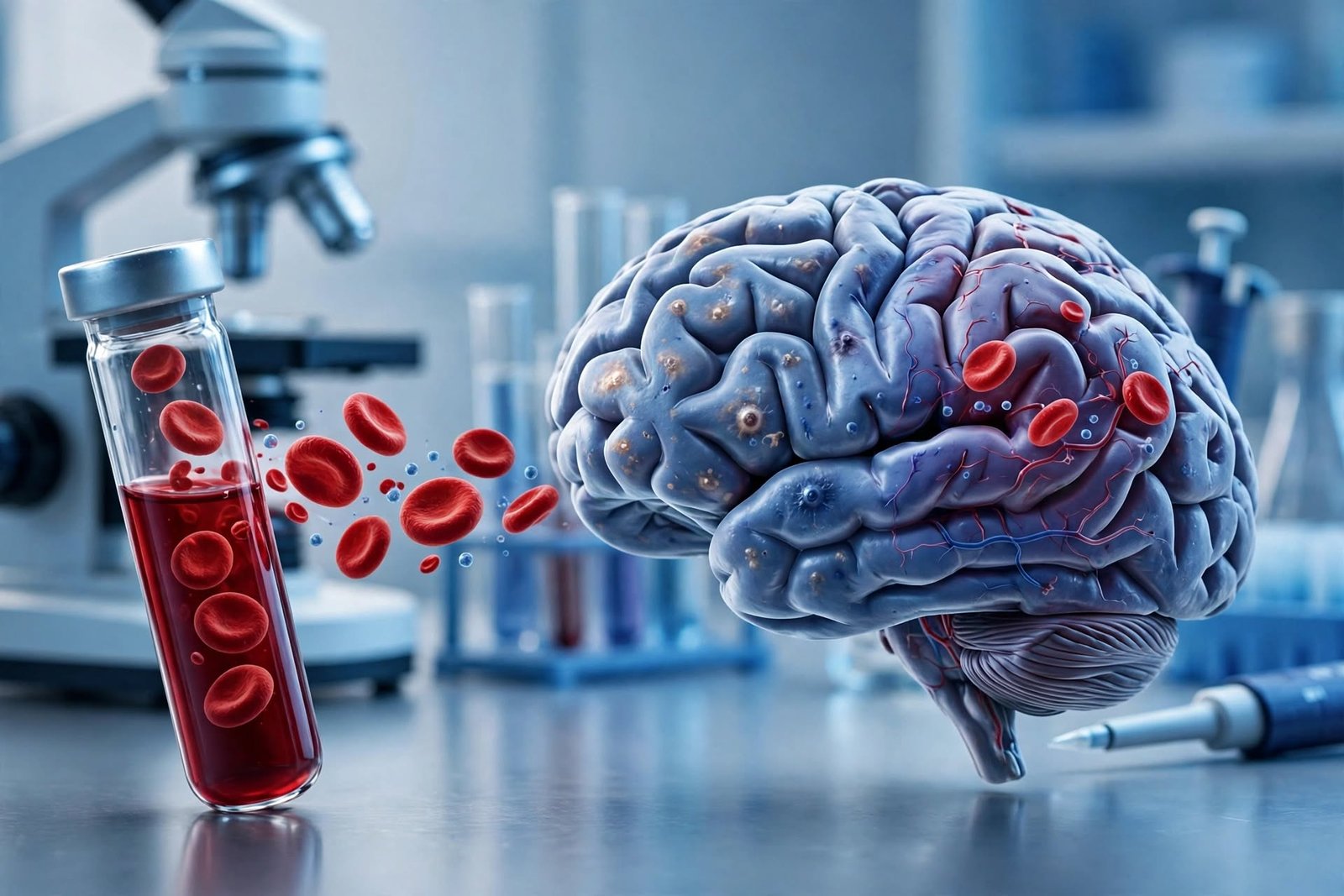
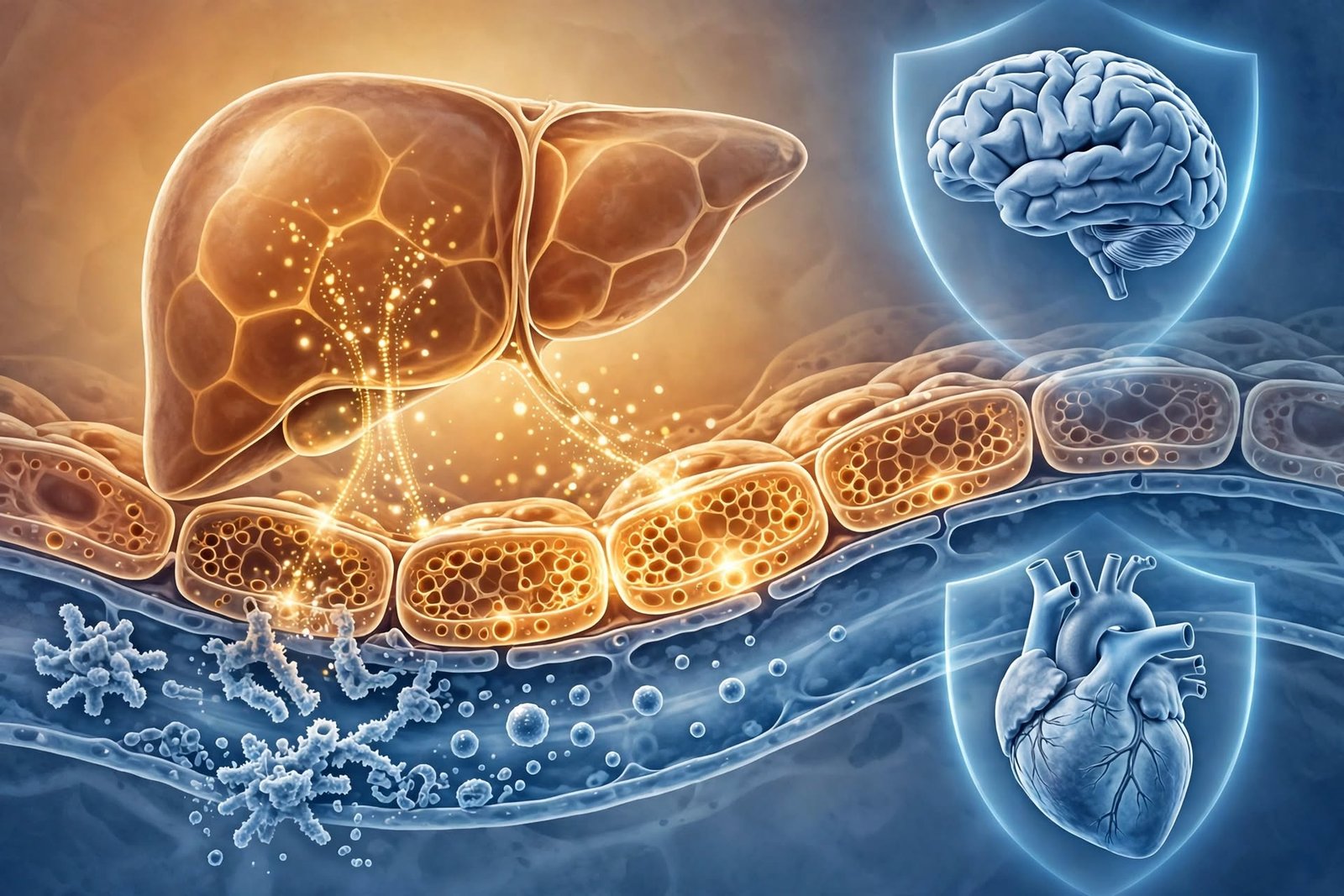
The liver may hold a surprising key to fighting two major age-related diseases. Researchers at the Keck School of Medicine of USC found that restoring aging liver cells in older rats dramatically lowered an Alzheimer’s-linked protein and bad cholesterol, opening a new therapeutic path that bypasses the brain entirely.
After just two weeks of treatment with an experimental drug called cinaciguat, amyloid beta levels dropped by about 50% and LDL cholesterol returned to youthful levels. The findings were published in the Journal of Biological Chemistry.
Why Look at the Liver for Alzheimer’s?
Although Alzheimer’s primarily affects the brain, the liver is central to filtering blood and removing unwanted compounds. As we age, the liver becomes less effective at clearing amyloid beta, a protein that can accumulate in the brain and form plaques. Targeting the liver could solve a major drug delivery problem. Alzheimer’s drug development has seen an estimated 98% failure rate in trials, partly because the blood-brain barrier blocks many medications from entering the brain.
Corresponding author Laurie DeLeve, MD, PhD, professor and vice chair for scientific affairs in the USC Department of Medicine, said, “We need to do further translational work to see whether our findings might point to new therapies. We’re hopeful, though, because the findings line up with a lot of epidemiological results showing age as a major risk factor for Alzheimer’s and atherosclerosis, and liver damage as a risk factor for Alzheimer’s.”
First author Sam de Leve, MA, added, “Rather than trying to get a drug through the blood-brain barrier, which is obnoxiously difficult, we could direct drugs to the liver, an organ where there might be more therapeutic impact and certainly an easier job of drug delivery.”
How Aging Clogs the Liver’s Natural Sieves
The team focused on liver sinusoidal endothelial cells, or LSECs. These cells line tiny blood vessels inside the liver and contain numerous microscopic openings that act like a sieve. The openings let large molecules in the blood reach neighboring hepatocytes, which process and remove them.
With aging, those openings shrink or disappear, so substances like amyloid beta stay in circulation longer. The researchers treated aged rats with cinaciguat for two weeks and compared them to untreated older rats and young rats.
The result: cinaciguat restored the structure and function of aged LSECs, reopening their pores and improving blood clearance. Amyloid beta fell by approximately 50% to levels comparable to young rats. Untreated old rats showed no improvement.
Unexpected Bonus: Bad Cholesterol Also Fell to Youthful Levels
The team also measured LDL, often called bad cholesterol because high levels contribute to fatty deposits inside arteries and heart disease risk. Since LDL particles are small enough to exit the bloodstream without needing the LSEC pores, researchers did not expect cinaciguat to affect LDL. Instead, LDL in treated older rats also dropped to young-animal levels.
“We said, ‘Wait, why did that go down? Clearly, there’s more to this story,'” Sam de Leve said. That clue led to a second discovery — a previously unknown communication system between liver cells.
Hidden Communication Pathway: LSECs Talk to Hepatocytes via HB-EGF
The researchers found cinaciguat activates an enzyme called soluble guanylate cyclase inside LSECs. This triggers release of a growth factor called HB-EGF, which signals nearby hepatocytes. In response, hepatocytes change their surfaces to capture more LDL and amyloid beta from the blood. Aging normally blocks LSECs from releasing HB-EGF. Cinaciguat restored the signaling, helping the liver work efficiently again.
This identifies a potential new drug target beyond just reopening physical pores — restoring the chemical messages that coordinate liver clearance.
Could This Help Prevent Alzheimer’s and Atherosclerosis?
According to the researchers, this is the first study to show a drug can fully restore aging LSECs structure and function, including clearance support, and the first to show a liver-directed treatment can bring age-related elevations in circulating amyloid beta and LDL back to youthful levels.
If translated, treatments targeting this pathway, including cinaciguat-like drugs or HB-EGF, could counteract liver aging effects and potentially reduce risk for Alzheimer’s and atherosclerosis. The authors stress this is an early step in rats. Lowering amyloid beta in blood does not automatically mean fewer plaques in the brain or Alzheimer’s prevention. The team plans to continue rat studies to see if amyloid beta lowering translates into measurable brain protection, and hopes other fields pick up the idea.
“We hope that people who are in fields like atherosclerosis research read this, and want to grab the idea for themselves,” Sam de Leve said. “There are six different ways someone could go with this, and we can’t do them all. So please, scoop us. We’d love it.”
Q&A
Q: What drug was used?
A: Cinaciguat, an experimental activator of soluble guanylate cyclase, given for two weeks to aged rats.
Q: How much did Alzheimer’s protein drop?
A: Circulating amyloid beta dropped by about half, to levels seen in young rats.
Q: Why did LDL also drop?
A: Through a newly discovered LSEC to hepatocyte signal via HB-EGF that makes hepatocytes capture more LDL and amyloid beta.
FAQ
1. Has this been tested in humans?
No. Findings so far are in aged rats only. Translational studies are needed.
2. Does lowering blood amyloid mean less brain Alzheimer’s?
Not necessarily. Blood clearance is promising but must be tested for brain plaque reduction and cognitive protection.
3. What are LSECs?
Liver sinusoidal endothelial cells that form sieve-like linings with pores allowing blood substances to reach hepatocytes for removal.
4. Where was the study published?
Journal of Biological Chemistry, from Keck School of Medicine of USC.
5. Could this apply to heart disease?
Yes. LDL lowering to youthful levels suggests potential relevance for atherosclerosis, where fatty deposits restrict blood flow.
Disclaimer: This article is for informational purposes only and does not constitute medical advice, diagnosis or treatment. The study involved animals and an experimental drug not approved for human use for this purpose. Always consult a qualified healthcare professional for concerns about Alzheimer’s, cholesterol or liver health. Do not attempt to obtain or use experimental drugs.