
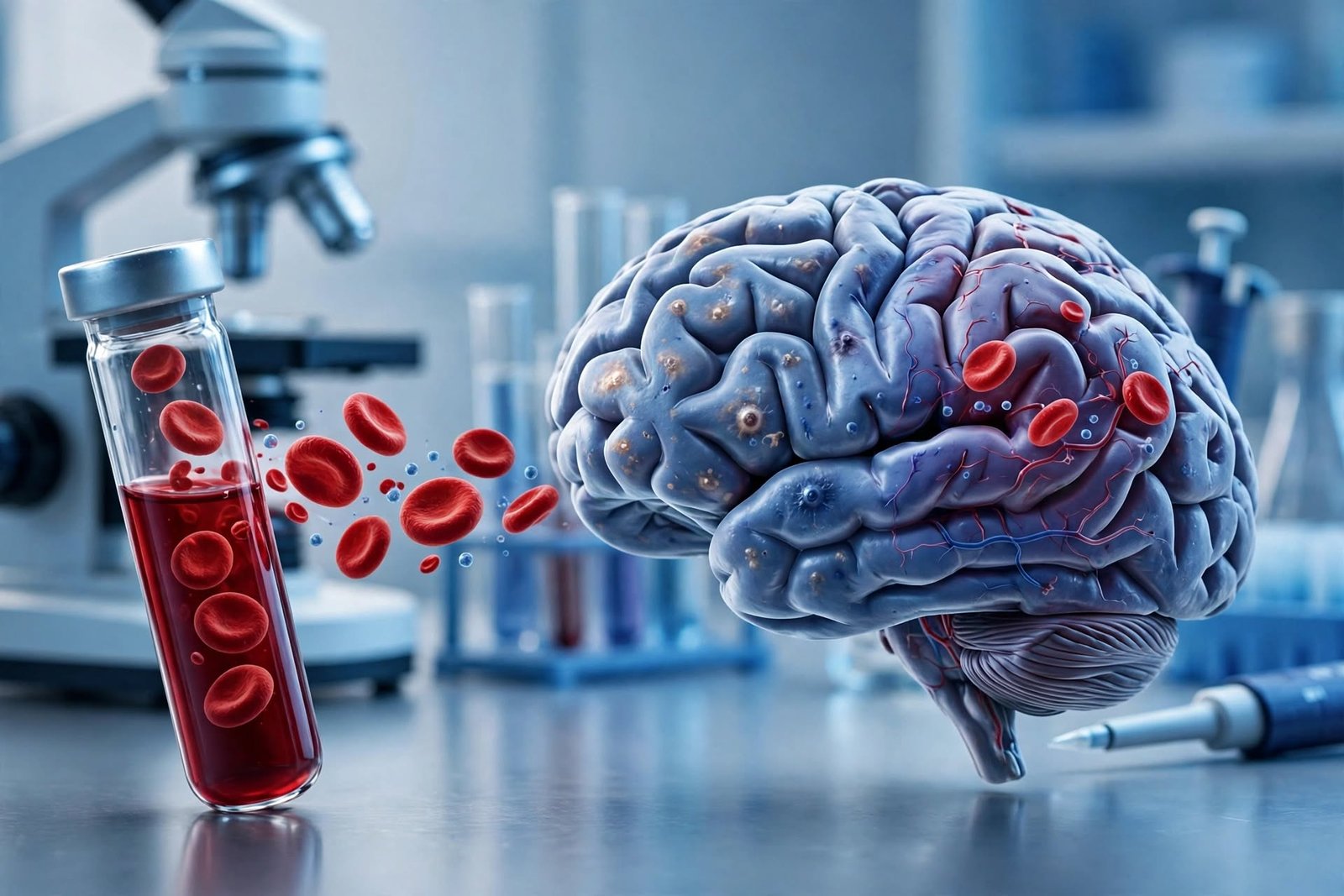
A standard blood test taken during a routine health check could offer clues about dementia risk more than a decade later. In a large study of over 316,000 adults, researchers found that people with unusually low or high hemoglobin levels were more likely to develop dementia.
Hemoglobin is the oxygen-carrying protein in red blood cells. Low levels are commonly linked to anemia, while unusually high levels can result from smoking, dehydration, or certain heart and lung conditions. The new findings suggest this familiar measurement may also reflect broader aspects of physical health tied to brain aging.
Tracking Dementia Risk for Up to 15 Years
Researchers analyzed health records from 316,542 Korean adults aged 40 and older who underwent national health screenings in 2004 and 2005. Participants were divided into five groups based on hemoglobin levels, from the lowest 20% to the highest 20%. National health insurance records were then used to track new dementia diagnoses through the end of 2019.
Compared with the group that had the lowest dementia rate, participants in the lowest hemoglobin category had a 16% higher risk of developing dementia from any cause. Those in the highest category had a 7% greater risk. The findings, published in the Journal of Alzheimer’s Disease and presented at the 39th ECNP Congress in Munich, also revealed important differences between types of dementia.
Alzheimer’s and Vascular Dementia Show Different Patterns
For Alzheimer’s disease, the increased risk was concentrated among people with the lowest hemoglobin levels. This group was 14% more likely to develop Alzheimer’s than the reference group. The relationship was different for vascular dementia, which is caused by reduced blood flow to the brain. People in the lowest hemoglobin category had a 19% higher risk, while those in the highest category had an 18% higher risk. However, the association did not follow a perfectly consistent pattern across all five groups.
The researchers also observed clearer and more consistent relationships among women than among men.
What Hemoglobin Levels May Reveal About Brain Health
Lead researcher Dr. Hyun Soo Kim, an assistant professor at Dong-A University College of Medicine in Busan, South Korea, emphasized that the results do not prove causation. “The findings do not show that hemoglobin itself causes dementia, but suggest that abnormal hemoglobin levels may be a visible marker of wider physical vulnerability relevant to brain health,” Kim said.
“Dementia is one of the fastest-growing health challenges in aging societies, and there are not many treatments and no cure. Identifying simple, accessible markers of future risk could help researchers and clinicians better understand how whole-body health relates to brain health over time.”
Could Routine Blood Tests Help Identify Future Risk?
Hemoglobin is already measured in standard blood tests around the world. That makes it far more accessible than specialized brain imaging or newer dementia biomarkers. The researchers suggest that existing blood test results could help scientists investigate connections between general physical health and long-term cognitive decline.
“A blood test most people already get at a routine check-up may say something about their brain health many years later. In this large Korean cohort, people with unusually low hemoglobin, and, to a smaller degree, those with unusually high hemoglobin, were more likely to develop dementia,” Kim explained.
“This does not prove that hemoglobin causes dementia, but it supports the idea that general physical health, including the body’s ability to carry oxygen, matters for long-term brain health.”
Why the Findings Do Not Prove Cause and Effect
Because the study was observational, it cannot determine whether abnormal hemoglobin levels directly contribute to dementia. Other medical conditions could influence both hemoglobin and brain health. Early dementia processes might also affect nutrition, body weight, frailty, or anemia long before the disease is formally diagnosed.
“We want to emphasize that the findings should not be interpreted as advice to take iron supplements, to raise hemoglobin levels, or to lower high hemoglobin levels in order to prevent dementia. An abnormal hemoglobin result should instead be discussed with a doctor, because it may point to underlying health issues that deserve attention,” Kim said.
More Research Is Needed Across Different Populations
The study drew on health records from South Korea, which leaves questions about whether the same relationships apply to people from other ethnic, geographic, and medical backgrounds.
Further research is needed to establish whether identifying abnormal hemoglobin levels can meaningfully improve dementia risk assessment and prevention strategies globally.
Q&A
Q: Can a hemoglobin test predict if I will get dementia?
A: No. The study found an association, not a prediction tool. People with unusually low or high hemoglobin had a higher risk, but hemoglobin itself is likely a marker of overall physical vulnerability, not a direct cause.
Q: Why are low and high hemoglobin both linked to vascular dementia?
A: Low hemoglobin may reduce oxygen delivery to the brain, while high hemoglobin can be linked to smoking, dehydration, and heart-lung conditions that impair circulation. Both extremes may reflect conditions that harm blood flow.
FAQ
1. How large and how long was the study?
The study included 316,542 Korean adults aged 40+ screened in 2004-2005, with dementia diagnoses tracked through 2019, covering up to 15 years of follow-up.
2. What were the specific risk increases found?
For any dementia, lowest hemoglobin group had 16% higher risk and highest had 7% higher risk. For Alzheimer’s, lowest group had 14% higher risk. For vascular dementia, lowest had 19% higher and highest had 18% higher risk.
3. Should I take iron supplements if my hemoglobin is low to prevent dementia?
No. Researchers specifically warned against self-treating. An abnormal result should be discussed with a doctor to investigate underlying health issues.
4. Where was this research published?
In the Journal of Alzheimer’s Disease and presented at the 39th ECNP Congress in Munich. The lead author is Dr. Hyun Soo Kim from Dong-A University College of Medicine.
Disclaimer: This article is for informational purposes only and summarizes observational research from a Korean cohort. It does not constitute medical advice, diagnosis, or treatment. Abnormal hemoglobin levels can have many causes. Always consult a qualified healthcare professional about blood test results and dementia risk concerns.