
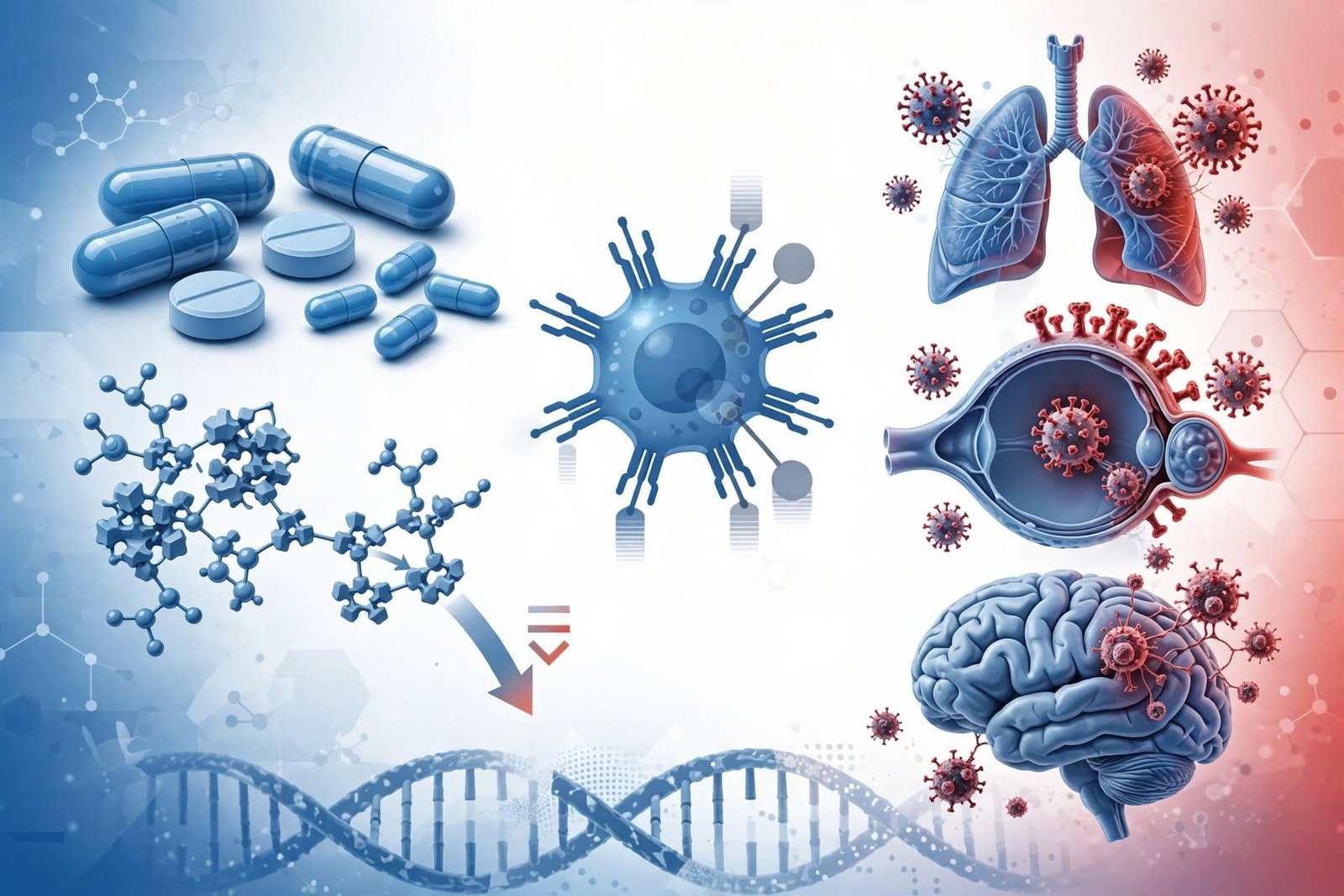
Medications are designed to treat diseases and relieve symptoms, but some can also produce unintended effects that put patients at risk. Scientists at the Norwegian University of Science and Technology (NTNU) have discovered that a widely used class of anti-inflammatory medications may make it easier for certain viruses to infect cells and spread throughout the body.
“We have found a surprising and potentially serious side effect of a class of anti-inflammatory drugs. They can help viruses spread more easily in the body,” says Denis Kainov, professor at the Department of Clinical and Molecular Medicine at NTNU. The medications at the center of the findings belong to a class called Janus kinase inhibitors, or JAK inhibitors. These drugs are widely prescribed to control inflammation in autoimmune diseases such as rheumatoid arthritis.
“Among the viruses that more easily affect the body with the help of these drugs are Rift Valley fever virus, influenza A, adenovirus and SARS-CoV-2, the virus that causes COVID-19,” Kainov says.
These viruses can cause significant illness, making any treatment that potentially increases their ability to spread a serious concern for patients and doctors.
Why Arthritis Drugs Can Weaken Antiviral Defenses
In a new study published in NAR Molecular Medicine, Kainov and his colleagues investigated how JAK inhibitors influence the body’s ability to defend itself against viruses.
“JAK inhibitors are often prescribed for autoimmune diseases and inflammatory conditions such as rheumatoid arthritis,” says Erlend Ravlo, PhD research fellow at NTNU and first author of the article. Although these medications can be highly effective at reducing inflammation, their benefits come with an important trade-off. By suppressing certain immune responses, they can also interfere with mechanisms that normally protect the body from viral infections.
“In particular, the drugs suppress an important immune signalling pathway that helps protect healthy cells from viral attacks,” Ravlo said. This pathway plays a central role in coordinating the body’s response when viruses attempt to infect healthy tissue.
Scientists Discover How JAK Inhibitors Disrupt Immune Protection
The research team found that JAK inhibitors, including the medication baricitinib, can reduce the activity of genes involved in fighting viral infections. “These genes play a crucial role in the body’s response to viral infections,” said Aleksandr Ianevski, NTNU researcher and co-author of the new paper.
When JAK inhibitors interfere with this immune signaling system, they weaken an important layer of antiviral protection. Without the usual defensive response, viruses may find it easier to establish an infection and spread between cells. To investigate these effects, the scientists combined advanced virology methods with gene expression analysis and organoid technology. Their experiments included cells from the lungs, eyes, and brain, along with miniature organ models grown in the laboratory.
“Although JAK inhibitors are effective in the treatment of inflammation, this shows that they can pose a hidden risk for patients who have latent or active viral infections,” says Ravlo.
What the Findings Mean for Patients and Future Treatments
The results highlight the importance of carefully considering risks, particularly when patients may already have a viral infection or when outbreaks are occurring. Researchers suggest healthcare professionals should exercise caution when prescribing these medications during periods of increased viral transmission.
However, the same immune-suppressing properties that create potential risks could also offer advantages in certain research settings. Under controlled laboratory conditions, these effects may help scientists develop vaccines or evaluate potential antiviral medications. “We recommend further studies to better understand how the drugs can be used optimally, especially during virus outbreaks or pandemics,” says Ianevski.
Professor Magnar Bjørås of the Department of Clinical and Molecular Medicine provided significant expertise and secured most of the funding. Additional support came from the Central Norway Regional Health Authority, South-Eastern Norway Regional Health Authority, Research Council of Norway, and Swedish Research Council.
Q&A
Q: What are JAK inhibitors used for?
A: JAK inhibitors like baricitinib are widely used to control inflammation in autoimmune and inflammatory conditions, including rheumatoid arthritis.
Q: How can they help viruses spread?
A: They suppress an important immune signaling pathway that protects healthy cells from viral attacks and reduce activity of antiviral defense genes, making it easier for viruses to infect and spread.
Q: Which viruses were affected in the study?
A: Rift Valley fever virus, influenza A, adenovirus, and SARS-CoV-2, the virus that causes COVID-19, were found to infect and spread more easily with the help of these drugs in lab models.
Q: Should patients stop taking JAK inhibitors?
A: No. Patients should not stop medication on their own. The study was laboratory-based using cells and organoids from lung, eye, and brain tissue. Discuss any infection risks with your doctor, especially during outbreaks.
FAQ
1. Where was the study published?
In NAR Molecular Medicine, led by researchers from NTNU in Norway, with first author Erlend Ravlo and senior author Denis Kainov.
2. How did researchers test the effect?
They combined virology, gene expression analysis, and organoid technology using human cells from lungs, eyes, brain, and miniature organ models grown in the lab.
3. Are JAK inhibitors dangerous for everyone?
The findings point to a hidden risk, especially for patients with latent or active viral infections or during periods of high viral transmission. Benefits for inflammation control remain significant.
4. Could this finding be useful?
Yes. In controlled lab settings, suppressing antiviral defenses can help researchers grow viruses to develop vaccines or test antiviral drugs.
5. What do researchers recommend next?
Further studies to understand optimal use of JAK inhibitors, especially during virus outbreaks or pandemics, and greater awareness among clinicians about immune effects.
Disclaimer: This article is for informational purposes only and summarizes laboratory research from NTNU published in NAR Molecular Medicine. It does not constitute medical advice. JAK inhibitors are prescription medications with important benefits for inflammatory diseases. Do not start, stop, or change medication without consulting a qualified healthcare professional.