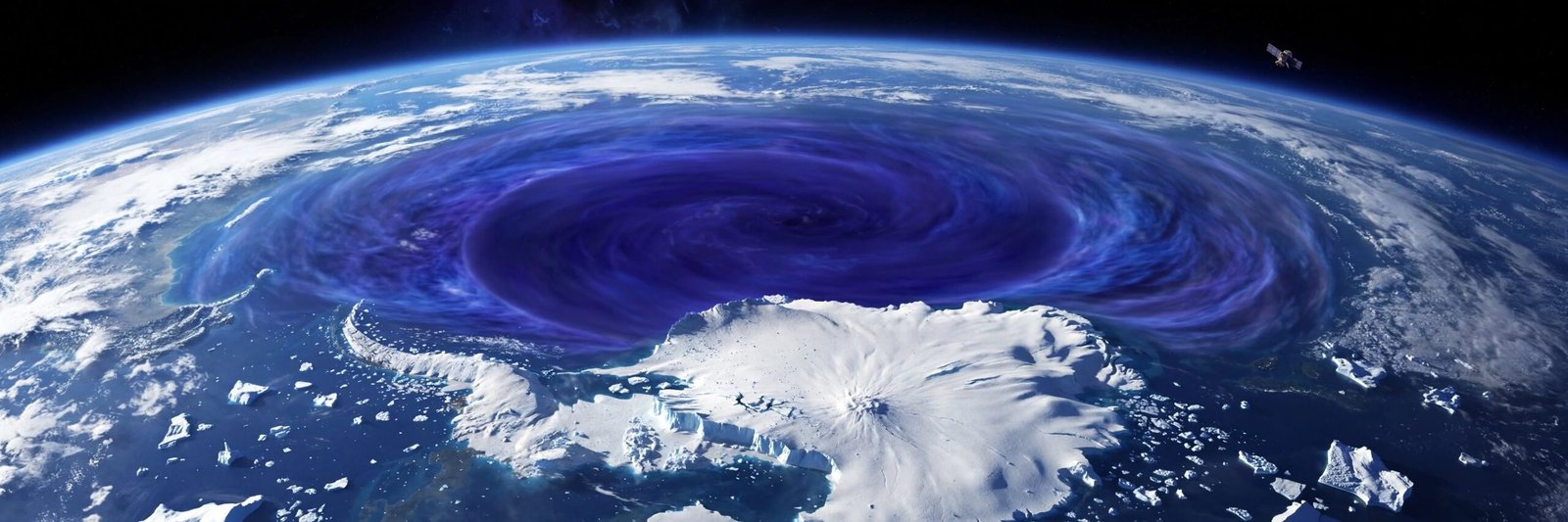
Unusual weather patterns over Antarctica caused the ozone hole to expand dramatically in 2026, reaching its seventh-largest size in forty-eight years of observations. Scientists from NASA and NOAA confirmed that Earth’s protective ozone layer continues its gradual recovery despite this striking seasonal expansion over the frozen continent.
Furthermore, international restrictions on ozone-destroying chemicals prevented the hole from growing even larger, demonstrating the lasting success of the landmark Montreal Protocol agreement.
Key Facts From The Research
The ozone hole reached its maximum extent on September 18, spreading across 10.5 million square miles or approximately 27.1 million square kilometers total. Importantly, this maximum size represented roughly ninety percent of the largest ozone hole ever measured, which occurred on September 9 during the year 2000.
Furthermore, ozone levels above the South Pole dropped to 105 Dobson units on October 17, marking the lowest reading recorded during the entire season.
Scientists expect the Antarctic ozone hole to fully recover by the 2070s if nations continue honoring their commitments under the Montreal Protocol agreement.
Analysis Of The 2026 Ozone Hole Expansion
The ozone hole covered approximately 9.6 million square miles between September and October, making it more than twice the size of the United States. Moreover, an exceptionally strong polar vortex trapped cold air over Antarctica and created ideal conditions for widespread ozone destruction across the entire southern region.
Additionally, atmospheric disturbances that normally weaken the vortex remained unusually subdued during August and September, allowing the powerful circulation to persist much longer. However, researchers emphasize that chlorine concentrations in the Antarctic stratosphere have declined by roughly one-third since their peak levels during the 1980s era.
Consequently, the 2026 ozone hole could have grown one to two million square miles larger without decades of international environmental protection efforts reducing harmful chemicals.
Q&A Section
Q: What caused the 2026 Antarctic ozone hole to grow to its seventh-largest size in nearly five decades of continuous satellite observations?
A: An exceptionally powerful polar vortex combined with weak atmospheric wave activity created ideal conditions for widespread ozone destruction across the entire Antarctic region.
Q: Does the large 2026 ozone hole mean that international efforts to protect the ozone layer through the Montreal Protocol have failed?
A: Scientists confirm the ozone layer continues recovering steadily, and the hole would have grown significantly larger without decades of international chemical reduction efforts.
Q: How do researchers measure ozone concentrations above Antarctica and track changes in the protective layer over multiple decades of observation?
A: NOAA researchers launch weather balloon instruments from the South Pole and use satellites including NASA’s Aura to measure atmospheric ozone concentrations continuously.
Frequently Asked Questions
1. What is the Antarctic ozone hole and why does it form over the southern polar region during specific seasons each year?
The ozone hole is a seasonal thinning of Earth’s protective stratospheric ozone layer caused by human-released chemicals and extremely cold Antarctic atmospheric conditions.
2. How large did the 2026 Antarctic ozone hole grow at its seasonal peak and how does that compare to historical records?
The hole reached 10.5 million square miles on September 18, representing approximately ninety percent of the largest ozone hole ever recorded in 2000.
3. What role does the stratospheric polar vortex play in accelerating ozone depletion over Antarctica during the Southern Hemisphere spring season?
The polar vortex traps extremely cold air over Antarctica, enabling special cloud formations that trigger chemical reactions destroying ozone molecules throughout the stratosphere.
4. How successful has the Montreal Protocol been in reducing ozone-depleting chemicals since nations adopted the landmark international agreement back in 1987?
Chlorine concentrations in the Antarctic stratosphere have declined by approximately one-third since their peak, confirming that the Montreal Protocol continues delivering measurable environmental results.
5. When do scientists expect the Antarctic ozone hole to fully recover and what factors could influence this projected timeline significantly?
Researchers project full recovery by the 2070s, though unusual weather patterns and lingering chemical emissions from old equipment could temporarily slow this healing process.
Conclusion
In summary, the 2026 Antarctic ozone hole reached its seventh-largest size on record due to unusual polar vortex conditions and weak atmospheric disturbances. Nevertheless, decades of international cooperation under the Montreal Protocol have significantly reduced harmful chemicals and kept the ozone layer on a steady recovery path.
Therefore, continued monitoring and sustained global commitment remain essential to ensure Earth’s protective ozone shield fully heals within the coming decades ahead.