
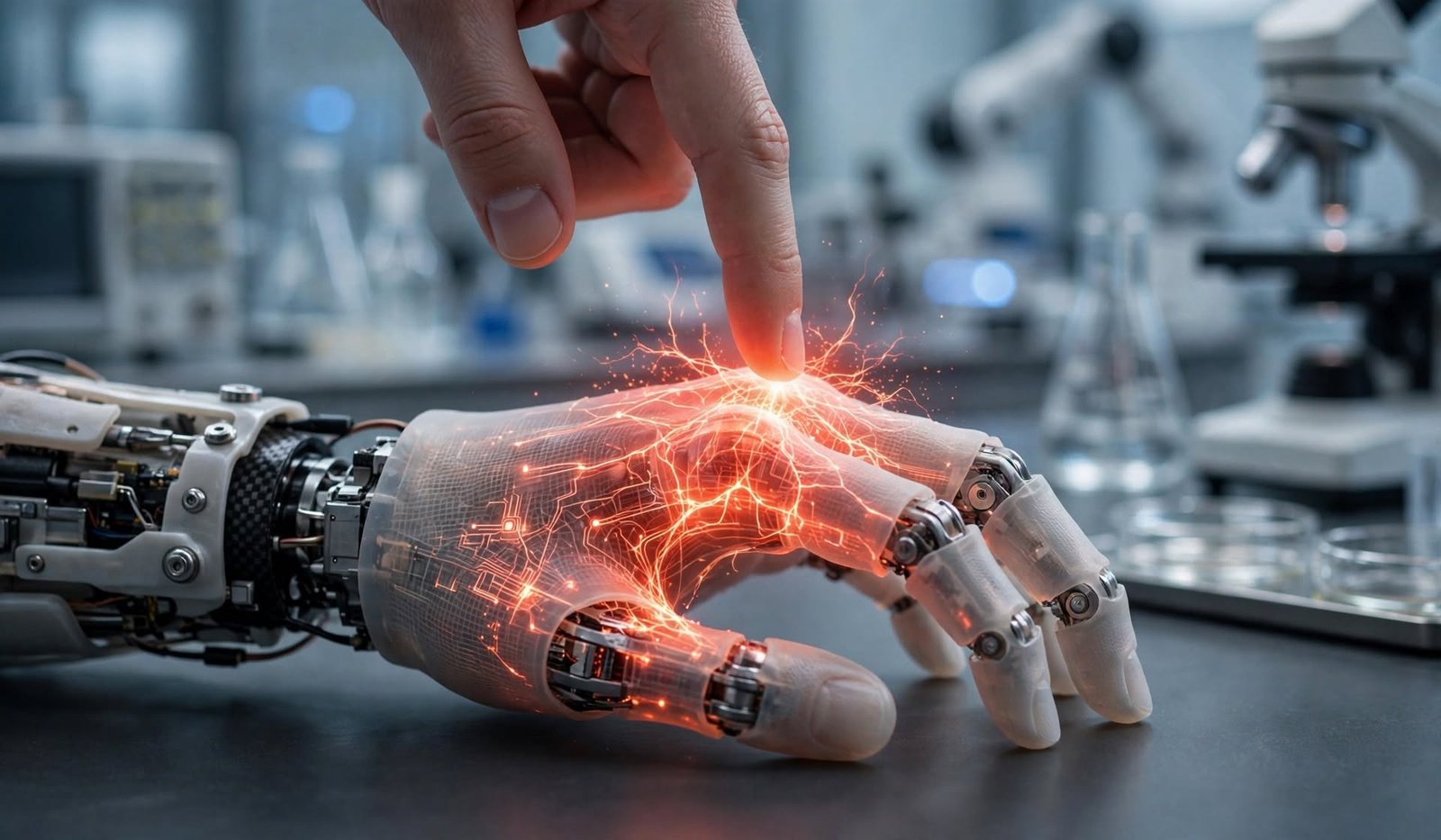
Scientists have built prosthetic skin that mimics one crucial feature of pain, warning when socket presses too hard against residual limb skin safely effectively globally. Prosthetic limb can help people stand, walk, or run again, but cannot always warn when socket pressing too hard against skin of residual limb.
That matters because excessive or uneven pressure where prosthesis meets body can cause discomfort, inflammation, ulcers, and affect balance and movement safely effectively globally.
Innovation: Bioinspired Sensor Locates Harmful Pressure
Scientists in China have now developed bioinspired sensor that locates pressure and identifies patterns that could signal harm to tissue safely effectively globally significantly. Described in study published in Cyborg and Bionic Systems device was tested on robotic hand and in small feasibility study involving people with lower.
Prototype is not complete prosthetic limb, it is sensor layer designed to sit inside socket between prosthesis and residual limb as artificial skin safely. Acting like artificial skin, it monitors where socket presses, how hard, and for how long, processing brief harmless pressure as ordinary touch safely effectively.
But pressure that continues, repeats, or builds across several locations can trigger early warning that tissue may be at risk of damage safely effectively.
How It Works: Two Complementary Pathways
Sensor uses two complementary pathways, haptic pathway rapidly reports location and intensity of pressure for immediate feedback and spatial awareness safely effectively globally significantly.
Pain-inspired pathway combines signals over time and across sensing points, using pressure-sensitive material and synapse-like transistors with memory-like responses safely.
This gives system simple form of memory following injury like input its warning response becomes more sensitive so weaker pressure can provoke stronger response. Device neither feels pain nor creates pain in user, said senior author Huaping Wu mechanical engineer at Zhejiang University of Technology said. Instead, it reproduces selected information-processing features associated with nociception, including stimulus thresholds, temporal and spatial summation, memory, and sensitization for warnings safely effectively.
Biological pain is far more complex involving nerves, spinal cord, brain, emotions, and conscious experience, device produces functional warning not actual pain safely effectively.
Robotic Hand Test: From Harmless Touch to Withdrawal
Researchers first placed four-sensor array on robotic hand, system treated 10 kilopascals of pressure applied for 0.21 seconds as harmless touch safely. When same pressure lasted 0.49 seconds however signal accumulated crossed warning threshold and made hand withdraw to prevent potential tissue injury safely effectively.
After injury-like event same pressure caused withdrawal in 0.06 seconds, imitating body heightened sensitivity after injury without conscious memory or feeling pain.
Human Feasibility Study: Three Below-Knee Amputees
Team then fitted sensors inside three participants below-the-knee prosthetic sockets and recorded pressure as they sat, walked, climbed stairs, jumped, and ran. Four sensing points were placed at pressure-prone locations selected using anatomy and participants reports of everyday discomfort for monitoring and feedback safely effectively.
During running, device detected excessive hip raising to help prosthetic foot clear ground, producing uneven loading and increased pressure at front of residual limb. System feedback helped participants adjust gait and reduce excessive hip movement, improving balance and reducing risk of discomfort and tissue damage during locomotion safely.
Validation: Agreement With Human Discomfort Ratings
To compare warnings with human assessments researchers used participants numerical discomfort ratings and observers ratings of facial expressions for validation of system accuracy safely.
Combining signals across space and time correctly identified 86 4 percent of brief discomfort events and 90 9 percent of prolonged ones showing strong.
Those figures describe agreement in these tests not user satisfaction, paper does not report how long participants wore system overall or include satisfaction survey. It cannot yet show whether users would find it comfortable or practical in daily life, though concept shows promise for tissue protection and rehabilitation. ionic hand connected to user bones muscles nerves provided limited touch while sensory prosthetic leg translated pressure beneath artificial foot into nerve signals safely. This device instead monitors hidden interface between residual limb and socket where sustained or uneven loading can damage tissue and cause ulcers safely effectively.
The results remain preliminary wired prototype must be miniaturized into compact low power wireless system with medical grade protection secure attachment and stability under loading. Larger and longer studies involving different amputations and socket designs are needed to determine whether system improves comfort tissue protection and rehabilitation for amputees.
If it proves reliable artificial skin could warn prosthesis users before harm occurs transforming prosthetic safety and comfort through bioinspired pain mimicking sensor technology.
Q&A Section
Q1: Why Is Socket Pressure Dangerous?
A: Excessive uneven pressure causes discomfort inflammation ulcers affects balance movement, sensor warns early prompting position change gait adjustment rest socket check for protection safely.
Q2: How Does Memory Sensitization Work?
A: After injury like input warning threshold lowers so weaker pressure provokes stronger response later imitating heightened sensitivity after injury with withdrawal in 0 06.
FAQ Section
What Is Prosthetic Skin That Mimics Pain?
It is bioinspired sensor layer sitting inside socket between prosthesis and residual limb, monitoring pressure location intensity duration and triggering warning when risk detected.
How Does It Mimic Pain Without Causing Pain?
Haptic pathway reports location intensity quickly pain inspired pathway combines signals over time and space using synapse like transistors with memory sensitization but no.
How Accurate Was Device?
Combining signals correctly identified 86 4 percent brief discomfort and 90 9 percent prolonged events during sitting walking stair climbing jumping running in three.
What Are Limitations and Next Steps?
Wired prototype needs miniaturization into wireless low-power system, medical-grade protection, larger longer studies across different amputations and socket designs for validation safely.
Disclaimer; This article provides general information for educational purposes only and does not replace professional medical advice, diagnosis, or treatment recommendations for prosthetic use safely.
Always consult qualified healthcare provider, prosthetist, or rehabilitation specialist for personalized guidance regarding prosthetic fitting, socket pressure, and tissue protection strategies safely effectively globally. Device is preliminary research prototype described in Cyborg and Bionic Systems not commercially available requiring further development miniaturization and larger validation studies before clinical.