
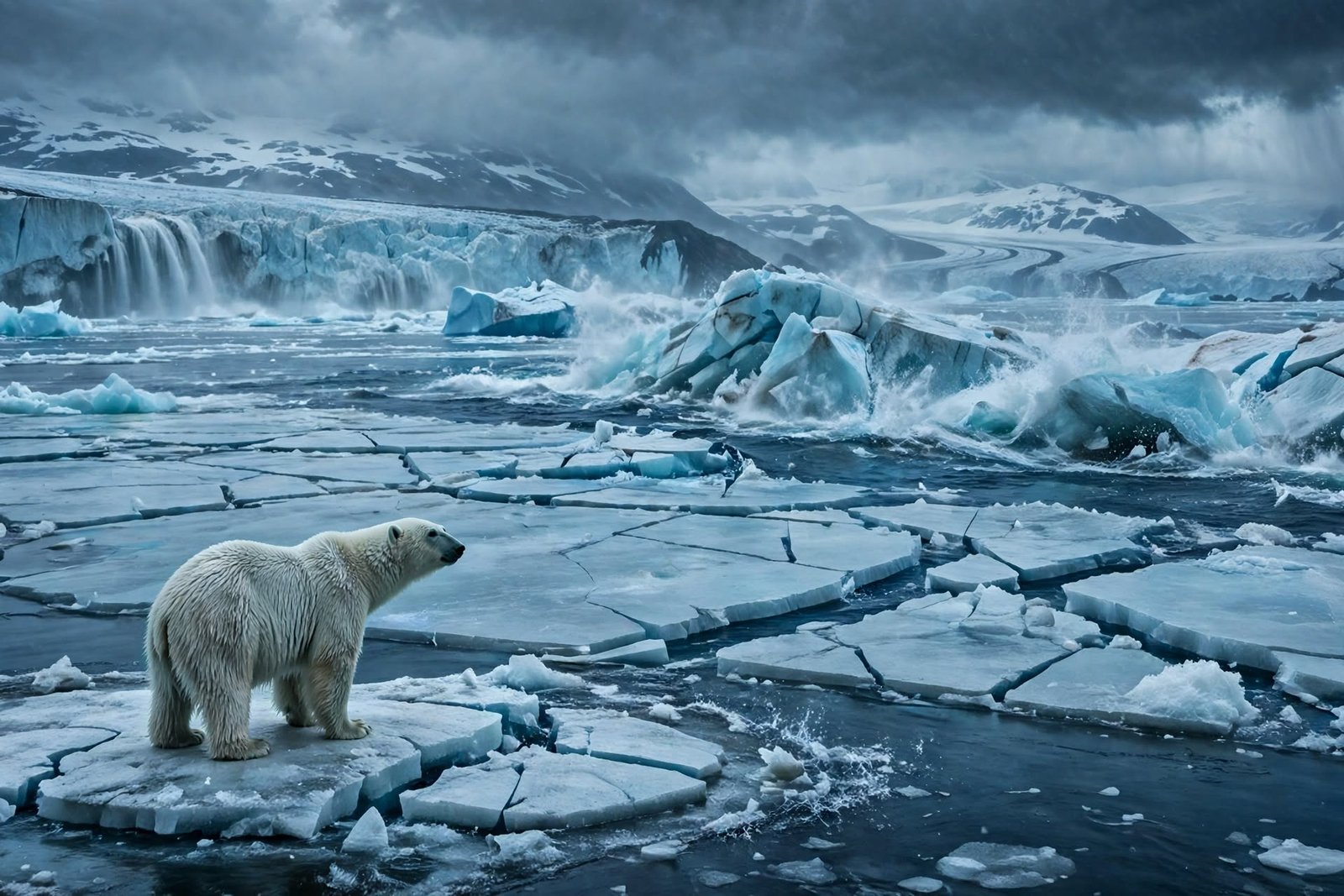
Earth’s cryosphere has officially breached its safe operating space. Fossil fuel combustion, intensive agriculture, and land-use changes have destabilized frozen ice sheets, seasonal snow caps, and permafrost regions globally. An international research team published their alarming planet-wide climate assessment inside the peer-reviewed journal Science directly ahead of the COP31 climate summit.
Lead author Bo Su from Stockholm Resilience Centre warned that degraded frozen foundations now threaten human civilization stability worldwide.
Four Key Cryospheric Boundaries Defined by Scientists
The research team established four fundamental environmental variables based on climate data recorded throughout the 11,700-year Holocene epoch. Conditions during the stable Holocene period enabled human agriculture, permanent settlements, and modern industrial societies to flourish across continents.
However, human activities pushed three key variables past safety limits, while committing the fourth variable to breach soon. Co-author Johan Rockström from Potsdam Institute emphasized that cryosphere degradation accelerates severe global weather disasters like recent flooding events.
Critical Boundary Thresholds Exceeded Across the Globe
Scientists defined exact physical limits required to keep the global cryosphere within a stable planetary operating zone today. Land ice must remain above 27.48 million gigatons, but committed emissions guarantee that global ice levels cross below this line.
Annual sea ice coverage dropped to 16.5 million square kilometers in 2024, falling far below the required 19.8 million threshold. Furthermore, average permafrost ground temperatures warmed to -5.3 degrees Celsius, breaching the recommended -6.6 degrees safety limit.
Strategic Analysis: Planetary Resilience and Policy Needs
Breaching cryospheric limits threatens freshwater security, coastline integrity, ocean circulation, and global climate stability for billions of people. The loss of reflective snow cover and sea ice accelerates global warming by allowing dark ocean waters to absorb heat.
World leaders attending COP31 must implement immediate policy measures to halt greenhouse gas emissions and black carbon pollution rapidly. Preserving remaining permafrost and glacier reserves requires reducing local infrastructure expansion throughout fragile Arctic and high-mountain regions worldwide.
Q&A: Key Scientific Insights
Question: What specific environmental components make up the global cryosphere analyzed by climate researchers in this Science journal report?
Answer: The cryosphere consists of sea ice, lake ice, mountain snow caps, glaciers, massive ice sheets, and ancient frozen permafrost.
Question: Why did researchers utilize environmental climate data from the Holocene epoch to calculate cryosphere safety boundaries?
Answer: Stable Holocene climate conditions over the past 11,700 years provided the exact hospitable environment necessary for human civilizations to flourish.
Frequently Asked Questions (FAQ)
- Which major scientific journal published this international study on Earth’s cryosphere planetary boundaries ahead of COP31?
The international scientific research team published their landmark planetary boundaries study inside the peer-reviewed journal Science. - Who served as lead author on this cryosphere climate study from the Stockholm Resilience Centre and Beijing Normal University?
Climate researcher Bo Su served as lead author alongside senior co-author Johan Rockström from the Potsdam Institute for Climate Impact Research. - How far did global sea ice coverage fall below the recommended planetary safety boundary during the calendar year 2024?
Global sea ice coverage dropped to 16.5 million square kilometers, falling 3.3 million square kilometers below the 19.8 million boundary. - What temperature threshold must permafrost ground maintain to remain inside the safe operating space defined by scientists?
Permafrost ground must maintain an average temperature of -6.6 degrees Celsius or colder to stay within safe operating boundaries. - What immediate policy actions do study authors recommend to restore Earth system resilience and protect remaining ice structures?
Authors demand urgent global action to reverse greenhouse emissions, reduce black carbon, and limit industrial infrastructure expansion in frozen regions.