
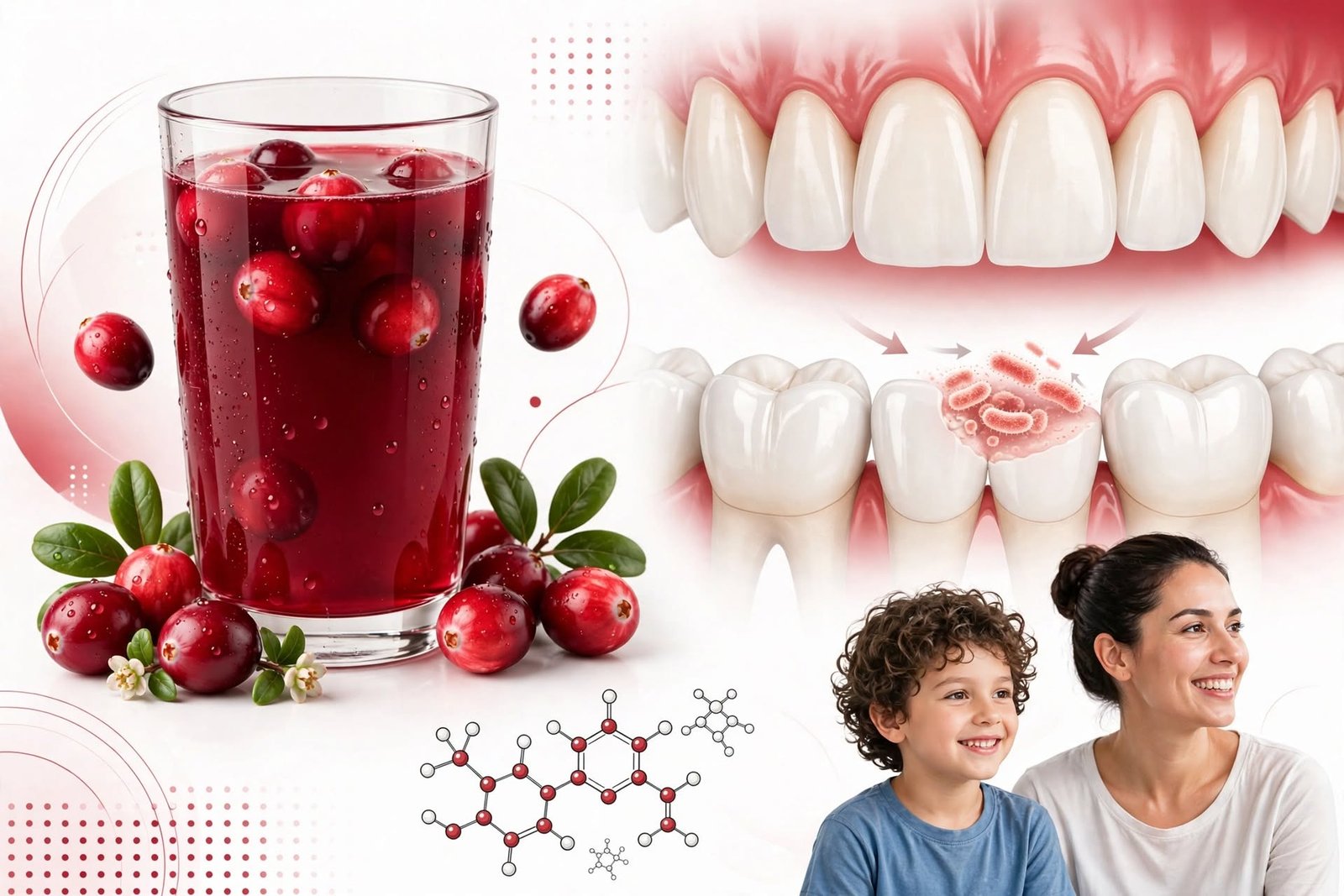
Cranberry juice has a reputation for being tart, acidic, and often sugary — qualities that seem poorly suited to protecting teeth. A small human study from the University of Illinois Chicago (UIC), however, found the opposite. Unsweetened pure cranberry juice was associated with slower dental plaque regrowth and lower acid production, two key factors in tooth decay.
UIC College of Dentistry researcher Christine Wu examined whether compounds naturally found in cranberries could affect dental plaque bacteria. These bacteria feed on sugars and produce acids that contribute to enamel breakdown. Cranberries contain proanthocyanidins, anti-inflammatory compounds known for blocking the attachment of bacteria like E. coli to cells.
“Just like sugar damage is linked to diet, I’m interested in how the food and beverages we consume can help combat the harmful bacteria and benefit our oral health,” Wu said.
Testing Pure Juice Against Sweetened Drinks and Water
Rather than testing isolated cranberry extracts in a lab, Wu and her colleagues used commercially available beverages. The study included 14 children and 8 adults, a total of 22 participants. Participants were randomly assigned to drink one of three beverages: unsweetened pure 100% cranberry juice, a cranberry juice cocktail containing 27% juice with added sugar, or plain water.
“It was important to us to conduct these tests with human participants and use products available on the market. Most cranberry juice studies have been conducted using laboratory-prepared cranberry juice extract. Moreover, limited studies have been performed in children,” said Wu, who is a professor of pediatric dentistry.
On the morning of the study, participants arrived with plaque that had accumulated overnight. Researchers collected plaque samples from one side of the mouth with cotton swabs. After a water rinse, participants drank three small portions of their assigned beverage, swishing each several times before swallowing. Thirty minutes later, researchers collected plaque from teeth that had not been swabbed earlier, allowing a direct before-and-after comparison.
Cranberry Juice Reduces Plaque Acid Production
Plaque exposed to pure cranberry juice appeared to regrow more slowly than the samples collected before the experiment. Swishing with pure cranberry juice was also associated with lower acid production in both children and adults.
That matters because acids produced by plaque bacteria contribute to the breakdown of tooth enamel and eventual cavities.
The findings raised the possibility that cranberry juice could eventually be considered a “functional beverage” with potential oral health benefits. Wu noted that other commonly consumed juices, including orange and apple juice, had not shown the same promise in her work.
“Most people think of cranberry juice as very sour, very acidic and sugary, and therefore may not contribute positively to oral health. This study found the opposite: that cranberry juice affected dental plaque regrowth and acid production, which may counteract some of the damage done by sugar,” she said.
Promising Results Need Larger Tests
The results are preliminary. With only 22 participants and short-term measurements at 30 minutes, additional experiments will be needed to determine whether the findings hold up in larger groups and over longer periods. For now, Wu said she would not rule out occasionally using pure cranberry juice as a mouth cleanser.
“But maybe by adding an appropriate sugar substitute, to make it a bit more palatable,” she said.
Q&A
Q: Does cranberry juice clean your teeth?
A: Not exactly. This small study found that swishing with unsweetened 100% cranberry juice was linked to slower plaque regrowth and less acid production 30 minutes later, compared to sugary cranberry cocktail or water.
Q: Why would cranberry help when it’s acidic?
A: The benefit may come from proanthocyanidins in cranberries that interfere with bacterial attachment. The study suggests this anti-adhesion effect may outweigh the acidity when the juice is unsweetened.
Q: Is sweetened cranberry juice cocktail good for teeth?
A: No. The study tested a 27% juice cocktail with added sugar and did not see the same benefit as pure juice. Added sugar feeds plaque bacteria that produce enamel-damaging acid.
Q: Can children benefit too?
A: The study included 14 children and found lower acid production in both children and adults after pure cranberry juice, which is notable since few cranberry studies have included children.
Q: Should I use cranberry juice as mouthwash now?
A: Not yet as a recommendation. Researchers call results preliminary due to small size and short-term follow-up. Larger, longer studies are needed.
FAQ
1. How was the study done?
Researchers at UIC College of Dentistry collected overnight plaque, had participants swish and swallow three small portions of their assigned drink, and then collected plaque again 30 minutes later to measure regrowth and acid production.
2. How many people were studied?
22 people total — 14 children and 8 adults — randomly assigned to pure 100% cranberry juice, 27% juice cocktail with added sugar, or water.
3. Where was it published?
The paper titled “In vivo exposure to cranberry juice suppresses dental plaque regrowth and acid production in adults and children: a PGRM study” was published June 23, 2026, in Scientific Reports. DOI: 10.1038/s41598-026-56025-3
4. Who led the research and who funded it?
Lead author Christine D. Wu, professor of pediatric dentistry at UIC. The research was partially supported by the Department of Pediatric Dentistry, College of Dentistry, University of Illinois Chicago.
5. Could cranberry juice become a functional beverage for oral health?
Researchers raised that possibility, but noted orange and apple juices have not shown similar promise in their work. More testing on formulation, taste with sugar substitutes, and long-term effects is needed.
6. Is pure cranberry juice too sour to drink?
It is very tart. Wu suggested a future palatable version might use an appropriate sugar substitute instead of sugar to retain potential benefits without feeding plaque bacteria.
Disclaimer: This article is for informational purposes only and summarizes a small preliminary human study with 22 participants. It does not constitute dental or medical advice. Do not use cranberry juice as a replacement for brushing, flossing, or professional dental care. Consult your dentist or healthcare provider for oral health advice.