Flexibility supports mobility, reduces pain and stiffness, and helps your body move efficiently, especially as muscles shorten with age and tightness builds safely effectively. As muscles shorten with age and tightness builds from sitting or repetitive movements regular stretching routine can gently increase range of motion and prevent.
These are some easy flexibility moves you can do at home without equipment, improving hip mobility, hamstring flexibility, and spinal mobility safely and effectively.
Move 1: Butterfly Stretch for Hips and Groin
Butterfly Stretch is classic flexibility move, opening hips and groin while gently lengthening spine for improved mobility and posture safely effectively globally significantly recently.
Sitting with soles of feet together and knees out to sides press knees toward ground to improve hip mobility and reduce inner thigh tightness.
Move 2: Figure Four Stretch for Glutes and Lower Back
Figure Four Stretch performed lying on back with one ankle crossed over opposite thigh, gently opening hips, glutes, and lower back for desk workers.
This stretch is especially helpful if you have tight hips from sitting or desk work, relieving lower back tension and improving glute flexibility significantly.
Move 3: Frog Stretch for Deep Hip Muscles
Frog Stretch targets inner thighs and hips, from all fours position spread knees wider than shoulder width and shift hips back toward heels gently.
Lowering onto forearms where comfortable, frog stretch is ideal for loosening deep hip muscles and increasing inner thigh flexibility and range of motion safely.
Move 4: Hamstring Stretch for Legs and Spine
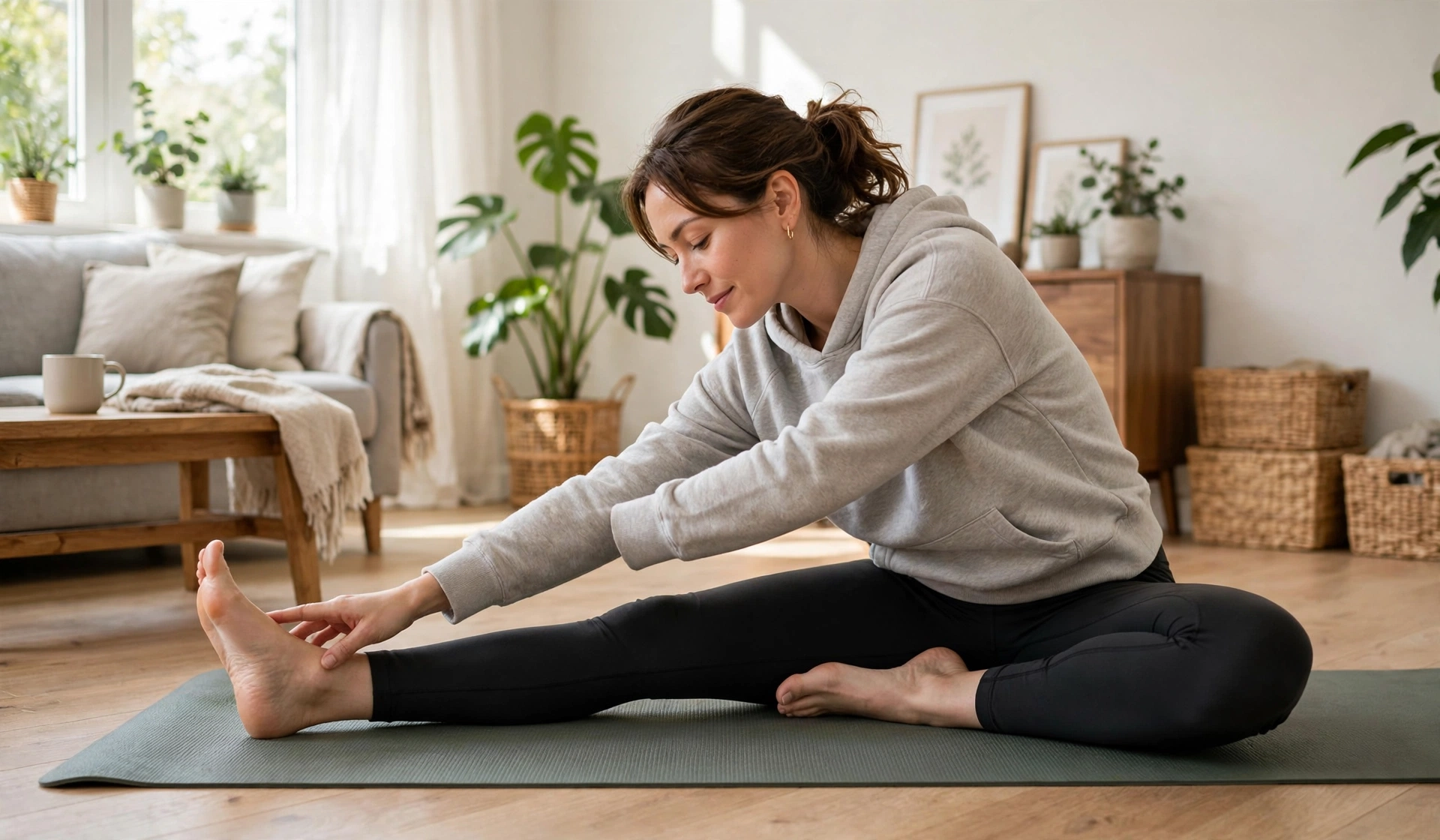
Hamstring Stretch is foundational stretch targeting hamstrings, back, and neck, bending forward from hips lowering head toward ground for lengthening safely effectively globally significantly.
You will feel lengthening through back of legs and spine, which improves hamstring flexibility and reduces tension from prolonged sitting and repetitive movements safely.
Move 5: Lunges with Spinal Twist for Dynamic Mobility
Lunges with Spinal Twist is dynamic stretch improving flexibility in hips, quads, and back through combined hip opening and spinal rotation movements safely effectively.
Step one foot forward into lunge, then twist upper body toward forward leg while raising opposite arm, enhancing both mobility and flexibility effectively safely.
Combination of hip opening and spinal rotation enhances both mobility and flexibility, supporting functional movement and reducing stiffness from desk work and aging safely.
Move 6: Sphinx Pose for Chest and Lower Back
Sphinx Pose from prone lying position place forearms on ground and lift chest creating gentle back arch for chest and lower back lengthening safely.
Sphinx pose lengthens chest, shoulders, and lower back, especially beneficial for those who sit or hunch frequently, improving posture and reducing upper back tightness.
Analysis: Why Flexibility Declines and How Stretching Helps
Why does flexibility decline with age and how does regular stretching help maintain mobility, reduce pain, and prevent injuries over time effectively safely effectively. Flexibility declines as muscles shorten, connective tissues stiffen, and repetitive sitting reduces range of motion, but consistent stretching restores length and mobility safely effectively.
In conclusion, easy flexibility moves like butterfly, figure four, frog, hamstring, lunges with twist, and sphinx support mobility, reduce pain, and enhance movement efficiency.
Q&A Section
Q1: How Does Flexibility Support Daily Life and Performance?
A: Flexibility increases range of motion, reduces pain and stiffness, improves movement efficiency, enhances posture, circulation, and helps prevent strains during daily and athletic activities.
Q2: Can Stretching Help Desk Workers?
A: Yes regular hip openers like figure four butterfly frog hamstring stretch lunges with twist and sphinx counteract sitting tightness relieve lower back tension improve.
FAQ Section
- How Often Should You Stretch?
Aim for daily stretching, holding each stretch 30 seconds, repeating 2 to 3 times, focusing on hips, hamstrings, back, and chest for balanced flexibility.
- Are These Moves Beginner-Friendly?
Yes, these moves are beginner-friendly, low-impact, equipment-free, and can be modified by reducing range, using support, and breathing deeply for comfort.
- What Are Benefits of These 6 Moves?
These stretches improve hip mobility, hamstring flexibility, spinal rotation, chest opening, reduce stiffness, enhance circulation, support posture, and help prevent injuries effectively safely effectively.
- Should You Warm Up Before Stretching?
Light warm-up like walking improves blood flow, hold stretches 20 to 60 seconds, breathe deeply, avoid bouncing, and stop if sharp pain occurs.
Disclaimer: This article provides general health information for educational purposes only and does not replace professional medical advice, diagnosis, or treatment recommendations safely effectively globally. Always consult qualified healthcare provider, physical therapist, or physician before starting new stretching routine, especially with injuries, chronic pain, or medical conditions safely effectively.