
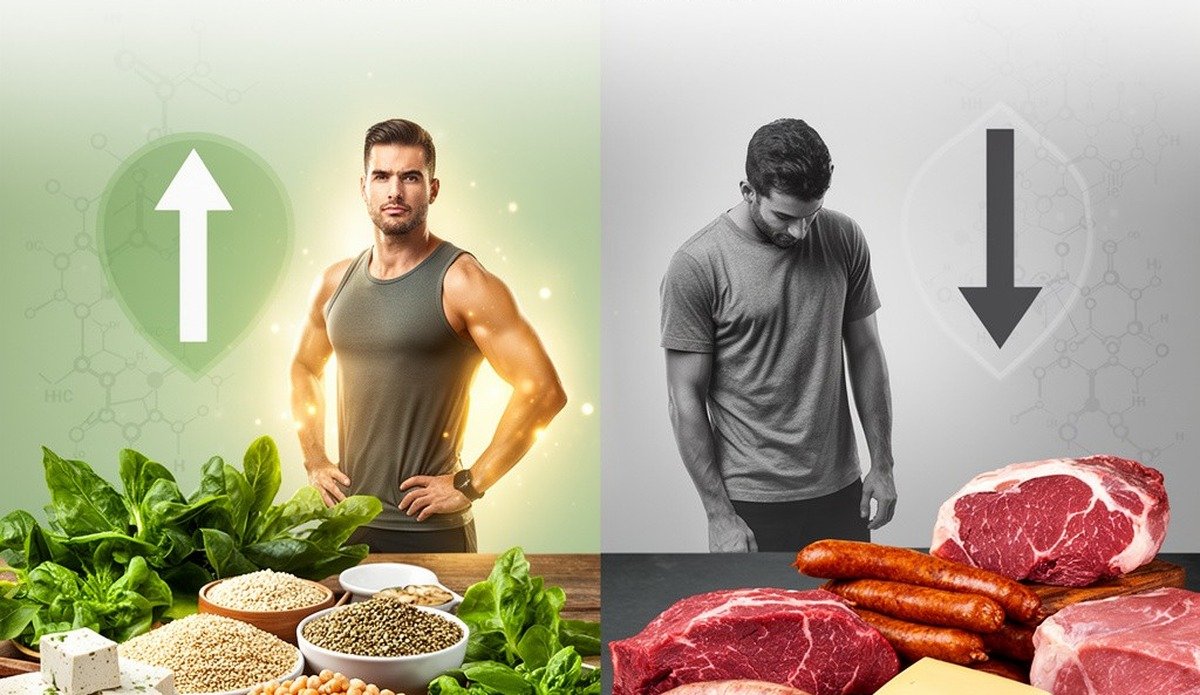
Plant protein intake correlates with higher testosterone levels while animal protein links to significantly lower concentrations, says a new Finnish study. Protein rich meals supply the body with essential amino acids that serve as fundamental building blocks for tissue growth and muscle repair processes.
Testosterone actively supports bone density and sexual function while also playing a crucial regulatory role in overall muscle development and healthy body composition.
This biological connection makes diet a logical area for researchers to investigate when studying the many complex factors that influence male testosterone production. Researchers at the University of Eastern Finland analyzed dietary data from over twenty five hundred middle aged men living in the Kuopio region.
Key Findings From the Finnish Study
The observational study found that men consuming more animal protein showed lower total testosterone levels compared with men eating much less animal protein. Conversely, men who consumed significantly higher amounts of plant protein consistently demonstrated slightly elevated total testosterone levels across all measured blood sample categories.
The highest animal protein group averaged approximately one point two nanomoles per liter below the lowest intake group in total testosterone concentration levels. However, researchers strongly caution that the observed differences remain relatively small and their actual clinical significance for overall male health remains entirely unclear.
Dairy and Meat Show Different Hormone Links
The research team published their detailed findings in the International Journal of Food Sciences and Nutrition after analyzing comprehensive four day food records. Higher dairy protein intake specifically associated with lower total testosterone and sex hormone binding globulin levels among the middle aged male study participants.
Interestingly, meat protein intake lowered sex hormone binding globulin levels but showed no significant association with total testosterone concentrations found in the blood. Among plant foods, higher protein intake from vegetables and non cereal sources consistently associated with higher total testosterone levels among the study participants. The Kuopio Ischaemic Heart Disease Risk Factor Study provided the extensive longitudinal data that enabled researchers to conduct this comprehensive dietary hormone analysis.
Questions and Answers About Protein and Testosterone
Q: How exactly does dietary protein intake influence testosterone production and regulation in middle aged men according to the current available scientific research evidence?
A: The Finnish study suggests that plant protein sources may support slightly higher testosterone levels while animal protein sources associate with marginally lower concentrations.
Q: Should middle aged men completely eliminate animal protein from their daily diets to maintain healthy testosterone levels based on these Finnish study findings?
A: Experts strongly advise against drastic dietary changes because the observed testosterone differences remain small and their actual health implications remain scientifically unclear overall.
Analysis of Study Limitations
The cross sectional study design prevents researchers from establishing direct causal relationships between specific protein sources and testosterone levels in middle aged men. Additionally, age and excess body weight significantly influence testosterone production which means that multiple lifestyle factors likely interact with dietary protein intake patterns.
Therefore, future longitudinal studies must measure individual dietary habits directly to determine whether protein sources genuinely affect testosterone production or hormone activity levels.
Frequently Asked Questions
1. What role does sex hormone binding globulin play in regulating testosterone levels and why did researchers measure it alongside total testosterone concentrations?
Sex hormone binding globulin actively binds to testosterone in the bloodstream and directly influences the total testosterone concentrations that researchers measure in blood.
2. When did researchers collect the dietary data and how does the historical timeframe affect the relevance of these findings for modern male populations?
The researchers collected detailed four day food records from male study participants between nineteen eighty four and nineteen eighty nine in eastern Finland.
3. Which specific plant protein sources showed the strongest positive associations with higher testosterone levels among the middle aged men in this Finnish study?
Vegetable protein sources and non cereal plant foods showed the strongest positive associations with higher total testosterone levels among the Finnish male participants.
Conclusion
This important Finnish study highlights the complex relationship between dietary protein sources and testosterone levels in middle aged men across different food categories.
Men should consult qualified healthcare providers before making significant dietary changes based on these preliminary observational findings about protein intake and hormone levels.
Disclaimer: This article provides general health information only and does not constitute professional medical advice so readers should consult qualified healthcare providers for personalized guidance.