
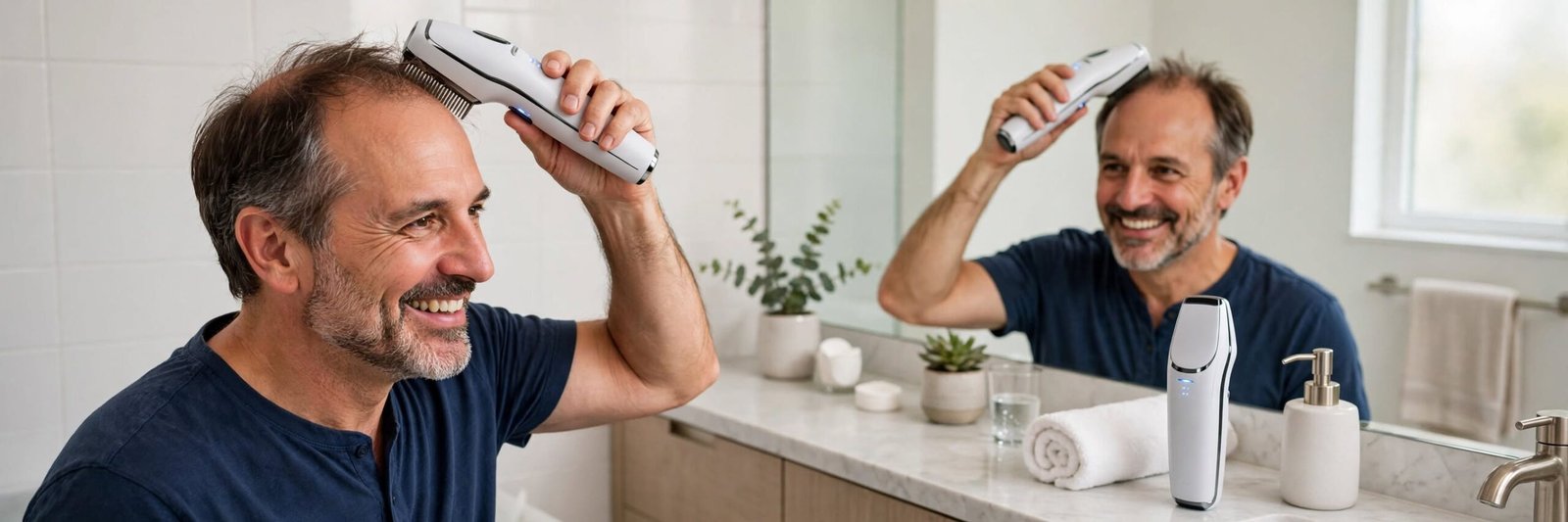
Scientists in China have developed a revolutionary comb-shaped bioelectronic device that regrows nearly all lost hair in mice within just one month. The Detangle system, published in Nature Communications, uses specialized electronic teeth to deliver electrical pulses and therapeutic molecules deep into hair follicles.
Furthermore, this innovative device targets androgenetic alopecia, a common form of pattern hair loss that currently affects over one billion people worldwide. However, researchers have only tested the device on mice so far, so human trials must confirm these remarkably promising results before widespread use.
Key Facts From The Research
The Detangle comb features height-differentiated electrode teeth that generate electric fields penetrating approximately nine times deeper than conventional external hair loss treatments. Importantly, alternating teeth of different lengths produce an electric field roughly 2.63 times stronger than uniformly aligned teeth would generate on their own.
Furthermore, untreated male mice regrew only about one percent of lost hair during the twenty-eight-day experimental period on their shaved back portions. The full Detangle treatment combining electrical stimulation with both experimental therapies achieved an extraordinary hair regrowth rate of approximately 97.85 percent in mice.
Analysis Of The Dual-Action Hair Regrowth Mechanism
The Detangle system works through two complementary mechanisms that simultaneously stimulate dormant hair follicles and deliver therapeutic molecules deep into surrounding skin tissue. Moreover, the electrical pulses activate follicle growth directly while the electroporation process temporarily increases cell membrane permeability to enhance drug absorption significantly.
Additionally, the researchers paired electrical stimulation with VEGFA plasmid to promote blood vessel growth and SRD5A2 siRNA to suppress follicle-shrinking hormones effectively. Nevertheless, electrical stimulation alone produced roughly forty percent regrowth, which fell short of the fifty to seventy percent achieved by finasteride and minoxidil.
Consequently, the combination of electrostimulation with both experimental genetic therapies proved essential for maximizing hair regrowth to nearly complete recovery in the mice. Therefore, this dual-action approach represents a significant advancement over conventional oral or topical medications that typically deliver slower and less complete hair restoration.
Q&A Section
Q: How does the Detangle electric comb device actually stimulate hair regrowth in subjects experiencing androgenetic alopecia or pattern hair loss?
A: The device generates pulsed electric fields from alternating teeth that stimulate follicles while delivering therapeutic molecules deep into skin through electroporation.
Q: What specific results did the Detangle system achieve compared to conventional hair loss medications like finasteride and minoxidil in the mouse experiments?
A: The full Detangle treatment achieved 97.85 percent regrowth, significantly surpassing the fifty to seventy percent regrowth produced by finasteride and minoxidil alone.
Q: When might the Detangle electric comb become available for human use if future clinical trials confirm these promising mouse study results?
A: Researchers must complete extensive human safety and efficacy trials before regulators approve the device, so commercial availability likely remains several years away.
Frequently Asked Questions
1. What is androgenetic alopecia and how many people worldwide currently experience this common form of progressive pattern hair loss?
Androgenetic alopecia is pattern hair loss caused by genetic and hormonal factors, and it currently affects over one billion people across the globe.
2. How do the height-differentiated teeth on the Detangle comb create stronger electric fields than conventional flat electrode designs?
The alternating shorter and longer teeth generate electric fields approximately 2.63 times stronger than uniformly aligned electrodes by creating enhanced field gradients.
3. What two experimental genetic therapies did researchers combine with electrical stimulation to achieve the maximum hair regrowth results in mice?
Researchers combined VEGFA plasmid to stimulate blood vessel growth and SRD5A2 siRNA to suppress follicle-shrinking hormones alongside the electrical stimulation treatment.
4. Why did electrical stimulation alone produce less hair regrowth than conventional medications like finasteride and minoxidil in the experiments?
Electrical stimulation alone achieved roughly forty percent regrowth because it lacks the targeted hormonal and vascular benefits that drug therapies provide simultaneously.
5. What major limitations should readers consider before assuming the Detangle comb will work equally well for human hair loss treatment?
The device has only undergone testing in mice, so researchers must demonstrate safety and effectiveness in human clinical trials before drawing conclusions.
Conclusion
In summary, the Detangle bioelectronic comb represents a groundbreaking advancement in hair loss treatment by combining electrical stimulation with targeted drug delivery technology. Therefore, if future human trials confirm these remarkable results, this innovative device could transform how doctors treat pattern hair loss worldwide.
Ultimately, the humble hair comb may soon make a powerful comeback and deliver genuine hope to over one billion people experiencing baldness.
Disclaimer; This article provides general informational content only and does not constitute professional medical advice or a substitute for consultation with qualified healthcare practitioners. Always consult your personal physician before pursuing any new hair loss treatments based on information you find within this online news portal.