
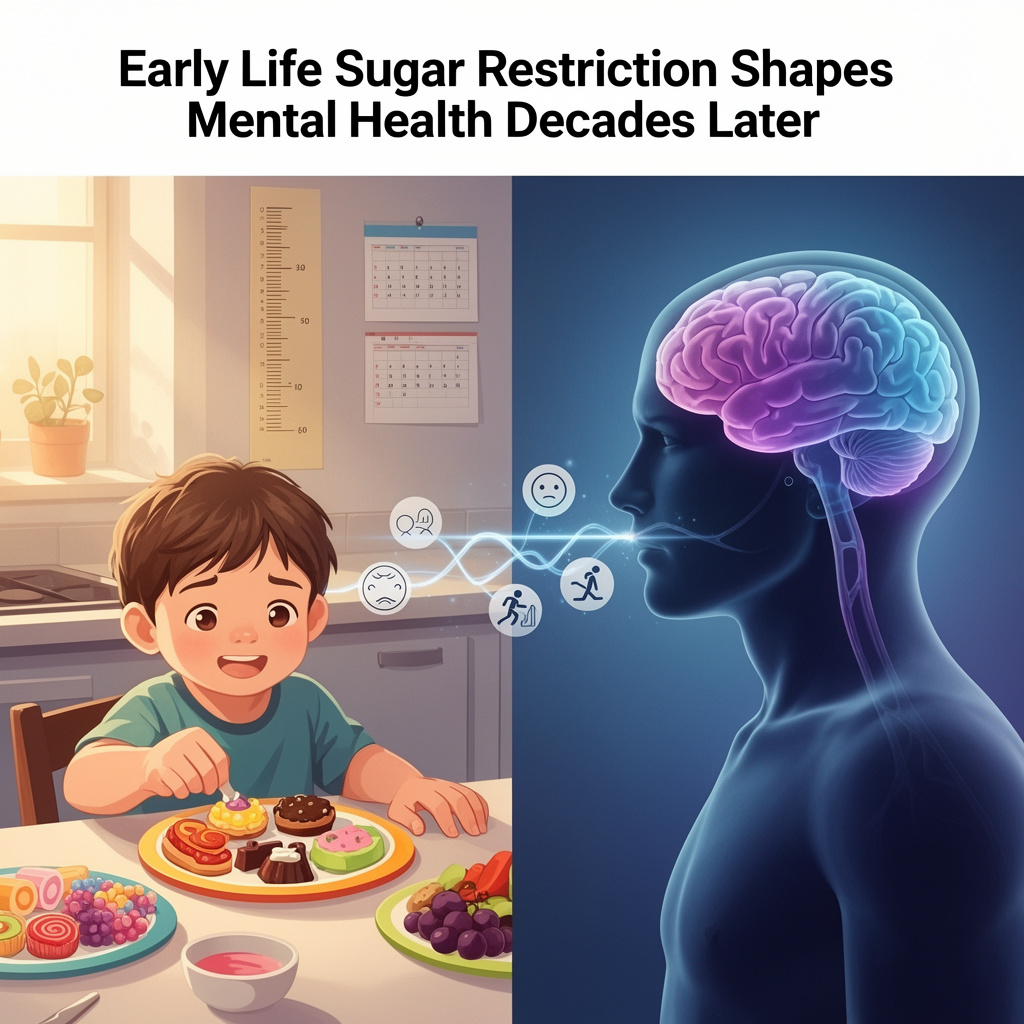
Limited sugar exposure during early life significantly reduces the risk of adult anxiety and depression decades later. A remarkable British study reveals that analyzed data from over sixty-six thousand UK Biobank participants who were born around the end of postwar British sugar rationing policies.
The United Kingdom strictly rationed sugar during World War II and maintained those restrictions until the government finally lifted them in September 1953. Consequently, sugar consumption surged dramatically across the nation and created a unique natural experiment for scientists studying long term health outcomes.
Key Findings From the Landmark Study
The study published in General Psychiatry found that early life rationing exposure correlated with a seventeen percent lower risk of adult anxiety. Furthermore, participants who experienced sugar rationing during infancy showed a fourteen percent lower risk of developing depression later in their adult lives.
The strongest protective associations appeared among individuals who experienced rationing throughout the critical first one thousand days spanning pregnancy and early infancy.
This specific group demonstrated approximately twenty-four percent lower relative anxiety risk and twenty-one percent lower relative depression risk compared with unexposed participants. Moreover, the first recorded anxiety diagnosis occurred roughly two years later among participants who experienced complete early life rationing exposure consistently.
Similarly, researchers observed that the first recorded depression diagnosis appeared approximately four years later in the fully exposed participant group overall.
How the Natural Experiment Worked
The end of sugar rationing provided scientists with a rare opportunity because the availability of other foods remained relatively stable throughout Britain. Researchers estimated individual exposure using birth dates relative to the policy change rather than measuring actual childhood food consumption records directly.
Therefore, exposure ranged from the prenatal period only to periods extending through approximately the first two years of early childhood development. However, the researchers acknowledge that unmeasured factors including other aspects of maternal diet may have influenced the observed mental health outcomes.
Questions and Answers
Q: How exactly does early life sugar restriction potentially influence brain development and stress regulation pathways that affect mental health in adulthood?
A: Researchers suggest that reduced sugar intake during critical developmental windows may positively influence stress regulation, inflammation levels, and overall brain development patterns.
Q: Can parents currently apply these historical findings to reduce their children’s future mental health risks by limiting sugar during pregnancy and infancy?
A: Experts recommend following established pediatric nutrition guidelines while awaiting further research that directly measures individual diets across diverse modern populations worldwide.
Analysis
The findings raise compelling questions about how early nutritional environments shape neurological development and psychological resilience throughout the entire human life course. Public health officials should consider these results when developing prenatal and infant nutrition guidelines that address long term mental health outcomes.
Additionally, the study underscores the importance of the first one thousand days as a critical window for establishing lifelong health trajectories. Nevertheless, further research measuring individual dietary intake across multiple populations will help clarify the precise mechanisms behind these observed protective associations.
Frequently Asked Questions
1. What specific time period does the first one thousand days cover and why do researchers consider it so critically important for development?
The first one thousand days span from conception through approximately the second birthday and represent the most rapid period of brain development.
2. Did the researchers measure actual sugar consumption or did they rely on birth dates relative to the British rationing policy change?
The researchers used birth dates as a proxy for exposure because individual childhood food records were unavailable for the study participants.
3. How might these findings about early sugar exposure influence future public health policies regarding maternal and infant nutrition guidelines worldwide?
These findings encourage policymakers to prioritize early nutrition interventions that could potentially reduce the growing global burden of anxiety and depression.
4. What limitations should readers consider when interpreting the results of this observational study about sugar rationing and long term mental health?
The study cannot establish direct causation because researchers tracked national policy exposure rather than measuring individual dietary habits during early childhood.
Conclusion
This groundbreaking British study provides compelling evidence that early life sugar restriction may offer lasting protective effects against adult anxiety and depression.
Healthcare professionals should integrate these insights into prenatal counseling and emphasize the profound long term impact of early nutritional choices on mental wellbeing.
Disclaimer: This article provides general information only and does not constitute medical advice so readers should consult qualified healthcare providers for personalized guidance.