
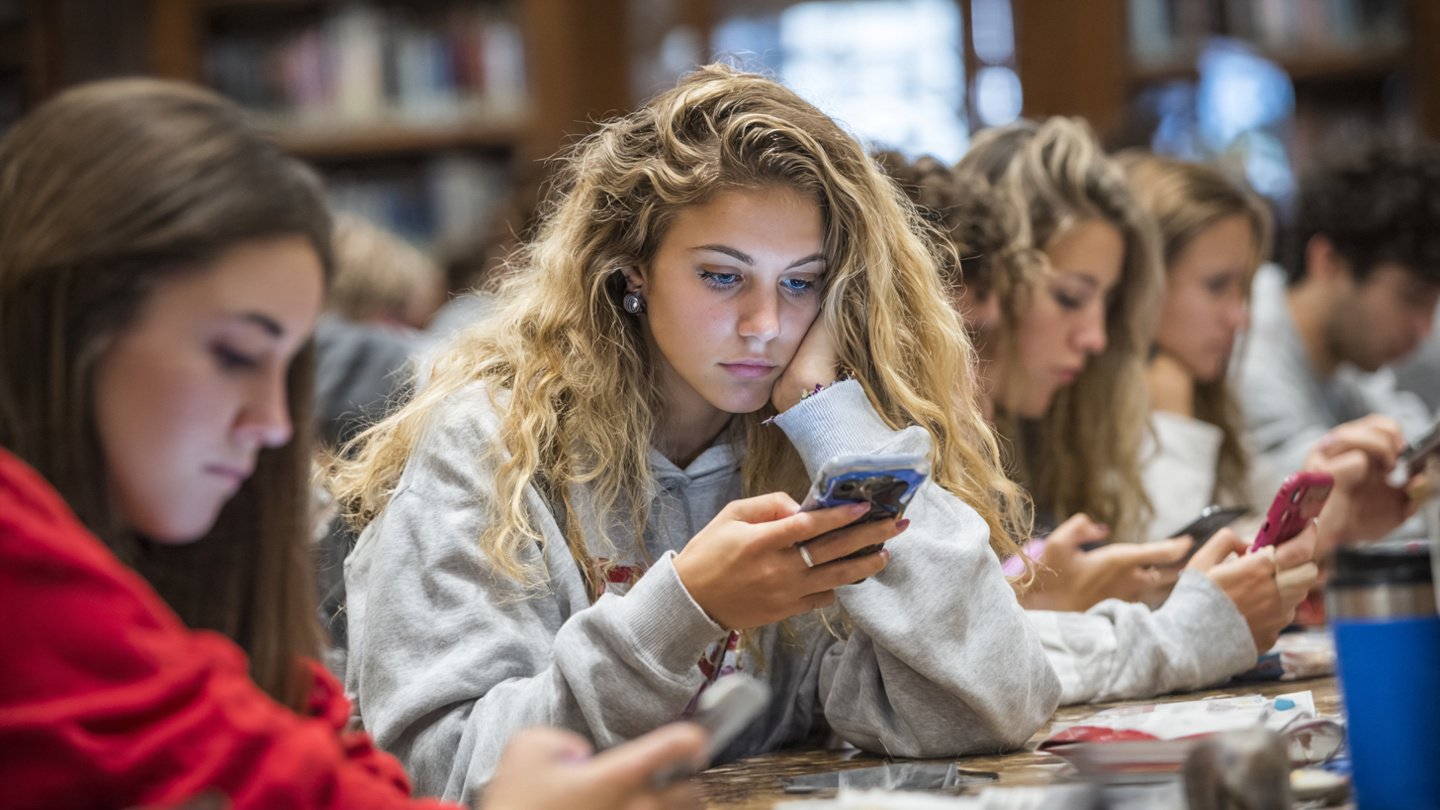
More than half of college students now report feeling lonely as digital platforms increasingly replace face-to-face interactions. A massive US study confirms that heavy social media use directly correlates with feelings of isolation. Researchers discovered that students spending over 16 hours weekly on these platforms face the highest risks.
Dr Madelyn Hill from Ohio University led this research to understand the transition into adulthood. She warns that lonely individuals are more likely to suffer from depression and may even face earlier death. Consequently, young adulthood represents a critical period for forming new friendships and establishing a sense of belonging.
The study found that 54% of students experienced loneliness, mirroring other recent findings across the United States. Interestingly, female and Black students reported higher levels of isolation than their peers during the survey period. These findings suggest that colleges must do more to help students forge genuine, real-world connections.
Quantifying the Social Media Risk
The research identifies a clear threshold where social media use becomes detrimental to a student’s mental well-being. Students using these apps for just two hours daily showed significantly higher odds of feeling lonely. As the time spent online increases, the likelihood of reported isolation rises dramatically.
Specifically, those spending 16 to 20 hours weekly are 19% more likely to feel lonely than non-users. This risk jumps to 38% for the heaviest users who spend at least 30 hours online each week. Platforms like Instagram, Snapchat, and Facebook remain the most popular choices for this age group.
Protection Through Real-World Connections
Physical environment and social involvement play a major role in protecting students from the “digital ache” of isolation. For instance, students living on campus reported lower levels of loneliness than those living at home. Participation in fraternities or sororities also offered protection, likely due to frequent in-person social events.
Furthermore, students in hybrid courses felt less lonely than those attending classes fully in person. Researchers believe these students maintained stronger connections with existing friends while navigating their new academic schedules. These mixed findings highlight the complex way digital and physical worlds currently overlap for young adults.
Critical Analysis
The research by Dr Hill exposes a fundamental paradox of the digital age: we are more connected yet feel more alone. While social media promises community, it often acts as a shallow substitute for the high-impact socialising found in Greek life or campus housing. The data suggests that we have reached a saturation point where digital consumption actively erodes social capital.
However, the “hybrid course” finding suggests that technology isn’t inherently isolating if used to supplement existing bonds rather than replace them. Universities must move beyond simply acknowledging mental health issues and begin treating social media literacy as a core life skill. Ultimately, the 38% spike in loneliness among heavy users is a public health warning that the higher education sector can no longer ignore.
Q&A: Understanding Student Loneliness
How much social media use is considered “heavy”?
Researchers defined heavy use as spending at least 16 hours per week, or roughly two hours daily, on social platforms.
Does social media cause loneliness, or do lonely people use it more?
The relationship may work in both directions, as isolated students often turn to online platforms for support and connection.
What can universities do to help?
Colleges should educate students about the impacts of social media and encourage them to set limits on daily digital use.
FAQ
Are certain students more at risk of loneliness?
Yes, the study indicates that female and Black students are more likely to experience feelings of isolation.
Which social platforms are most common among students?
Young adults primarily use Instagram, Facebook, and Snapchat to communicate with their peers.
Does living on campus help reduce loneliness?
Yes, students living on campus generally report lower levels of loneliness than those who live at home.