
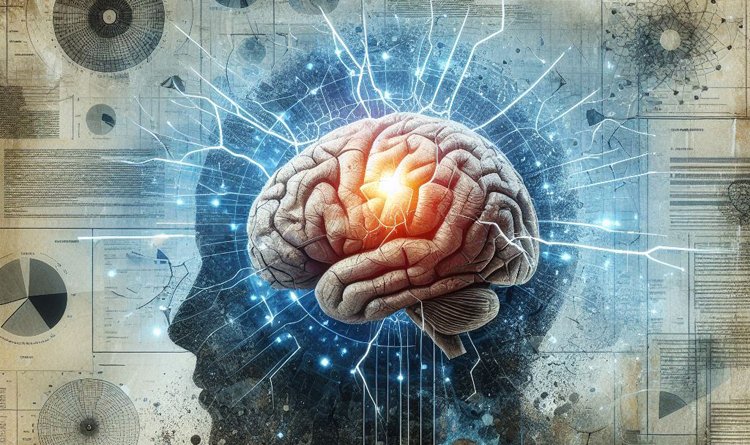
Single human brain cell may possess far greater computational power than scientists previously assumed, functioning like tiny biological computer rather than simple switch. Hebrew University researchers led groundbreaking study published in Proceedings of National Academy of Sciences revealing extraordinary processing capabilities of human cortical neurons recently.
Team included Professors Idan Segev and Mickey London, PhD students Ido Aizenbud and Daniela Yoeli, collaborating with Professor Chris de Kock from Amsterdam. Researchers developed innovative method combining advanced computer modeling and artificial intelligence to measure computational complexity of individual neurons accurately across species comparisons overall.
Basic idea remains straightforward: if artificial twin requires greater complexity to imitate biological neuron, biological neuron itself demonstrates greater computational power inherently overall. Results revealed human cortical neurons operate as sophisticated microchips thanks to richly branching dendritic trees and distinctive electrical properties enabling complex computations daily.
These neurons can distinguish visual inputs, such as cats versus dogs, performing computations comparable to deep artificial neural networks within single cell structure. People often imagine neurons as simple on-off switches, but Professor Segev emphasized single human neuron functions as extraordinarily sophisticated computing device independently overall.
Does Intelligence Come From Numbers Or Power?
For decades scientists attributed human intelligence primarily to brain size and connectivity, citing nearly one hundred billion neurons linked through enormous web worldwide. However, new findings challenge sheer number explanation, suggesting individual neuron complexity contributed importantly to evolution of language, imagination, mathematics, and invention abilities significantly.
Furthermore, researchers created systematic broadly applicable framework connecting physical structure of brain cells with computational capabilities, advancing understanding of thought and learning mechanisms. This approach could help scientists move closer to understanding how human brain produces learning, memory formation, and complex cognitive processes underlying human cognition.
Findings could also influence artificial intelligence development, inspiring brain-inspired AI built from computationally deep powerful units resembling biological neurons more closely than models.
Q&A – Understanding The Discovery
- Why do human cortical neurons exhibit greater computational power than neurons in other mammals despite sharing similar basic biological structures and functions generally?
Human neurons possess richly branching dendritic trees and distinctive electrical characteristics that enable sophisticated information processing comparable to deep neural networks within cells. - Does discovery that single neurons act like microchips mean human brain contains fewer necessary connections than previously believed for advanced cognitive abilities overall?
No, intelligence still relies on enormous connectivity, but enhanced computational power of individual neurons provides additional layer explaining human cognitive abilities beyond numbers.
FAQ
Could brain-inspired AI using computationally complex artificial neurons resembling human cortical neurons significantly outperform current simplified artificial neural network architectures for learning tasks?
Researchers suggest powerful artificial units mimicking human neurons could enable more efficient learning with fewer resources, potentially revolutionizing machine learning and intelligence development.
Analysis: What Makes Us Unique?
Analysis indicates human intelligence emerges from both massive network connectivity and extraordinary computational sophistication of individual neurons acting as powerful biological microchips simultaneously.
Disclaimer; This article provides educational information about neuroscience research and does not constitute medical advice, diagnosis, or treatment recommendation for neurological conditions or disorders. Always consult qualified healthcare professionals and neuroscientists for personalized guidance regarding brain health, cognitive function, and related scientific developments affecting personal medical decisions.