
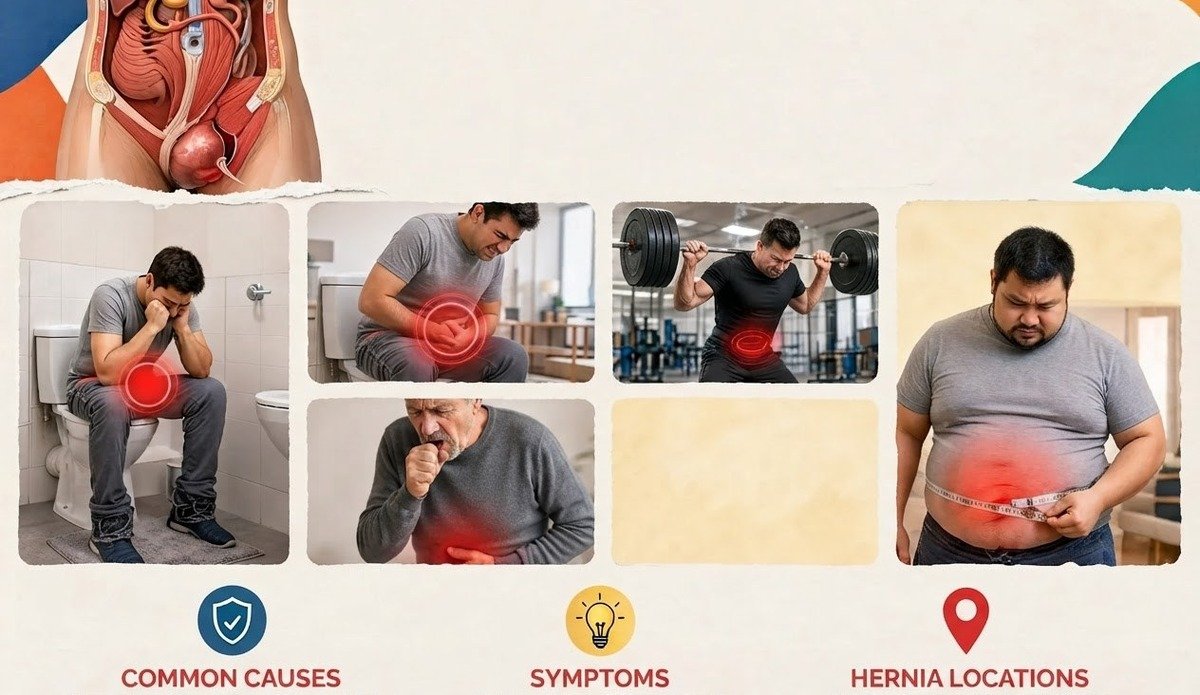
A hernia frequently builds up quietly over many years before any visible bulge or noticeable pain finally appears to alert the affected patient. Many people wrongly believe that hernias result only from lifting heavy objects or engaging in sudden intense physical exertion during their daily activities.
However, medical experts actively warn that common everyday actions also contribute significantly to weakening your abdominal muscles gradually over extended periods of time. The abdominal wall normally serves as a strong protective barrier that shields internal organs and maintains essential pressure equilibrium throughout your entire body.
Unfortunately, repeated daily stress and poor posture and unhealthy lifestyle choices gradually decrease the overall strength of your critical abdominal muscle wall layers. When these essential abdominal muscles become significantly weak, internal tissue can bulge outward and protrude through the compromised areas causing different hernia types.
Hidden Lifestyle Factors That Damage Core Strength
Sedentary habits and incorrect breathing patterns and chronic coughing and digestive overload all create constant harmful pressure inside your vulnerable abdominal cavity region. Therefore, understanding these harmful eating and lifestyle patterns becomes absolutely essential for anyone who wants to prevent hernia development throughout their entire life.
Moreover, implementing simple daily posture corrections and mindful movement habits can significantly reduce the harmful mechanical load on your fragile abdominal wall muscles.
Poor Sitting and Standing Posture
Maintaining a hunched back or excessively arched lower back position actively places dangerous additional pressure directly on your vulnerable lower abdominal muscle region. Long term incorrect posture progressively weakens your core muscles and severely reduces their natural ability to support internal organs against gravitational forces effectively.
Chronic Constipation and Excessive Straining
Applying significant downward pressure repeatedly during difficult bowel movements forces your abdominal muscles to perform excessive work that gradually damages their structural integrity. This continuous mechanical force eventually weakens individual muscle fibres throughout the abdominal wall and substantially increases your overall chance of developing a hernia.
Neglecting Core Strength and Regular Exercise
Completely avoiding core engaging movements causes a progressive loss of muscle tone throughout your entire abdominal region and all surrounding supportive tissue structures. These weakened muscles cannot properly support internal abdominal pressure during simple daily tasks such as bending forward or lifting moderate household objects safely.
Improper Lifting Techniques and Breath Holding
Raising heavy objects incorrectly or without proper core muscle support actively damages the abdominal wall and creates dangerous weak points over repeated sessions. Even lifting moderate weights regularly can cause significant abdominal damage if you consistently perform these movements without engaging your core muscles properly beforehand.
Many people unknowingly hold their breath during lifting and exercising and straining which dramatically raises intra abdominal pressure and strains weakened muscles suddenly.
Chronic Coughing and Excess Abdominal Weight
Chronic coughing from smoking or allergies or uncontrolled respiratory conditions consistently raises harmful pressure levels inside your abdominal cavity and weakens the wall.
Additionally, excess abdominal fat places continuous mechanical pressure on stomach muscles which causes the muscle layer to stretch and weaken progressively over time. This constant strain eventually prevents your abdominal muscles from holding internal organs securely in their proper anatomical positions throughout your daily physical activities.
Questions and Answers
Q: What specific everyday habits most commonly contribute to gradual abdominal muscle weakening and significantly increased hernia risk among otherwise healthy adult individuals?
A: Poor posture and chronic constipation and improper lifting techniques and sedentary lifestyles actively weaken abdominal muscles and elevate your overall hernia risk.
Q: Can chronic coughing from allergies or respiratory conditions actually cause a hernia by repeatedly increasing pressure inside the abdominal cavity over time?
A: Chronic coughing consistently generates forceful pressure spikes inside the abdominal cavity that progressively weaken the abdominal wall and may trigger hernia formation.
Analysis of Hernia Risk Factors
Consequently, individuals who combine multiple risk factors such as poor posture and excess weight and chronic straining face substantially higher hernia development risks.
Medical professionals strongly recommend that patients address these modifiable lifestyle factors early to prevent the gradual weakening of critical abdominal muscle support structures.
Frequently Asked Questions
1. How long does a hernia typically take to develop before obvious symptoms such as visible bulging or persistent pain finally become noticeable?
A hernia often develops silently over many years before symptoms appear because the abdominal wall weakens gradually through repeated daily stress and strain.
2. Does holding your breath while lifting heavy objects significantly increase your personal risk of developing an abdominal or inguinal hernia over time?
Holding your breath during lifting dramatically spikes intra abdominal pressure which places sudden dangerous strain on already weakened abdominal muscle fibres and tissues.
3. Can losing excess abdominal weight actually reverse muscle weakness and significantly reduce your overall risk of developing a hernia in the future?
Reducing excess abdominal fat decreases continuous pressure on stomach muscles which allows weakened tissue layers to recover and regain their natural structural strength.
Conclusion
Understanding these hidden everyday causes empowers you to protect your abdominal muscles and significantly reduce your personal hernia risk through simple lifestyle changes.
Start correcting your posture and strengthening your core and managing chronic coughing and avoiding excessive straining to safeguard your abdominal wall health effectively.
Disclaimer: This article provides general health information only and does not constitute professional medical advice so readers should consult qualified healthcare providers for personalized guidance.