
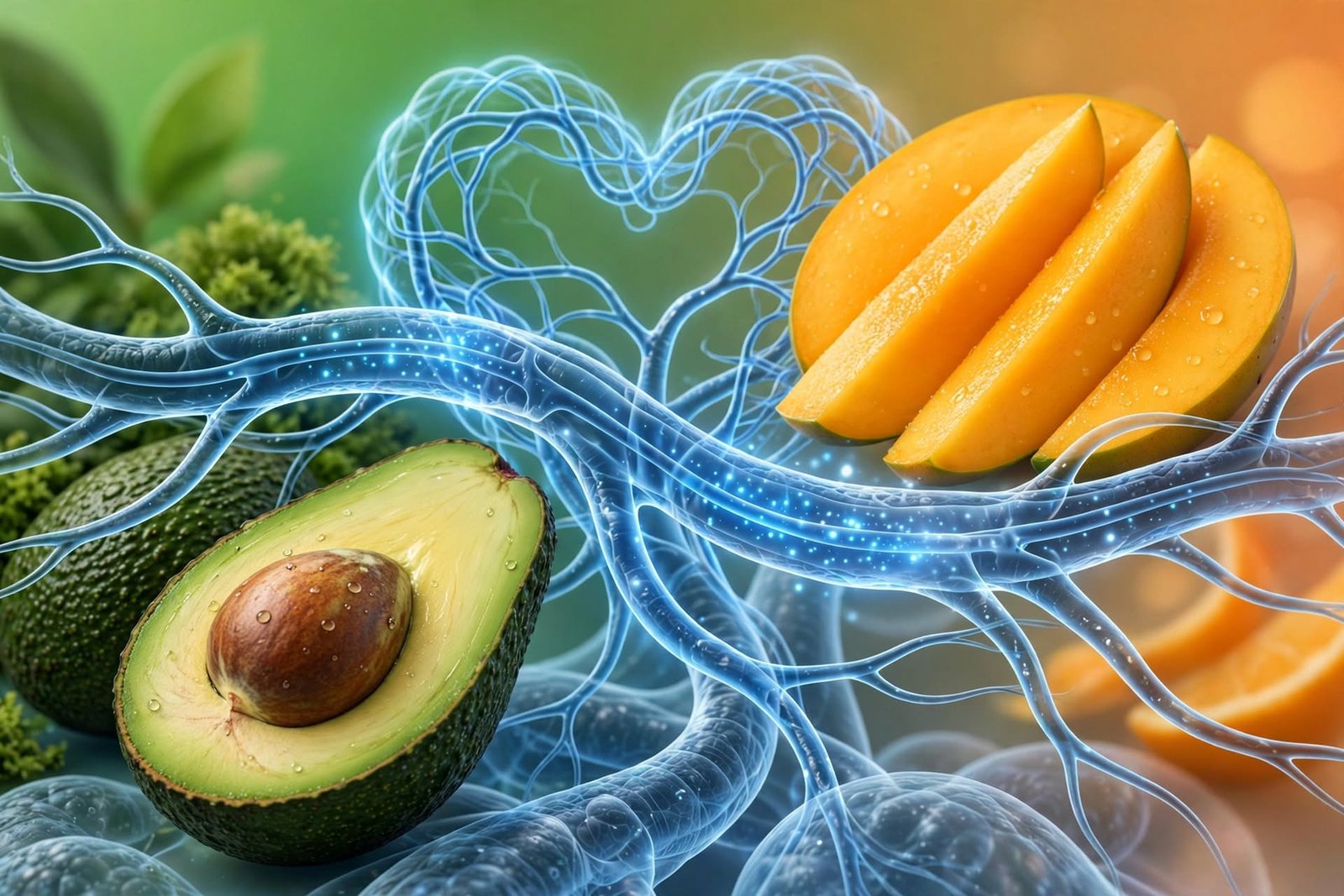
Eating an avocado and a cup of mango every day may provide surprising benefits for heart health, according to new research in adults with prediabetes. After just eight weeks, participants saw significant improvements in blood vessel function and diastolic blood pressure, particularly among men, without weight gain or higher calorie intake.
Published in the Journal of the American Heart Association, the findings are relevant for the nearly one in three Americans with prediabetes, a condition where blood sugar is elevated but not yet at the threshold for type 2 diabetes. Prediabetes raises risk for both diabetes and cardiovascular disease. Researchers at Illinois Institute of Technology investigated an Avocado-Mango (AM) diet including one medium Hass avocado and one cup of fresh mango daily, compared to a calorie-matched carbohydrate-based control diet.
How The 8-Week Study Was Done
The study included 82 adults aged 25 to 60 with prediabetes and overweight or obesity (BMI 25–35 kg/m2). Participants were generally healthy, non-smokers, not on specialized diets, and without major chronic conditions. To ensure consistency, researchers prepared and supplied meals covering 75% of each participant’s estimated daily calorie needs. Participants chose the remaining foods independently. One group ate a medium Hass avocado plus a cup of fresh mango daily, while the control group received carbohydrate alternatives with equivalent calories. Diets were modeled on typical American eating patterns.
Primary outcome was flow-mediated dilation (FMD), a noninvasive test of endothelial function — how well the thin layer of cells lining blood vessels helps regulate circulation and artery widening. Researchers also tracked blood pressure, blood sugar, metabolic indicators, inflammation, kidney function (including eGFR), and nutrient intake.
Key Results: Better Vessel Flexibility and Lower Pressure Without Weight Gain
Blood vessel function improved: FMD increased significantly to 6.7% in the avocado and mango group, while it declined to 4.6% in the control group. Better FMD means arteries expand more effectively as blood flows, a key marker of cardiovascular health.
Blood pressure improved in men: Men in the control group had an average increase of 5 mmHg in central blood pressure, while men consuming avocado and mango saw a reduction of about 1.9 mmHg. Diastolic blood pressure, the pressure when the heart relaxes between beats, showed encouraging differences that researchers said could be clinically meaningful if sustained.
No weight gain: Improvements occurred without significant changes in body weight or total calorie intake, suggesting nutritional quality matters even when weight remains stable.
Nutrient intake improved: The AM group consumed more fiber, vitamin C, and monounsaturated fat, nutrients linked to cardiovascular wellness.
Kidney indicators improved: Researchers noted improvements in certain kidney health markers including estimated glomerular filtration rate (eGFR), which assesses how well kidneys filter waste.
Cholesterol, blood sugar, and inflammation markers remained largely unchanged versus controls.
Why Mango and Avocado May Help Together
Although different in flavor, mango and avocado provide complementary nutrients.
Mango provides dietary fiber (2g per 3/4 cup serving) and is an excellent source of vitamin C (50% DV), an antioxidant that helps protect cells. Fiber supports digestion, blood sugar regulation and cardiovascular wellness.
Avocado provides fiber (3g per 50g, or 1/3 medium avocado), monounsaturated fat (6g unsaturated fats per serving) which can help reduce LDL cholesterol when replacing less healthy fats, and potassium (250mg, 6% DV) involved in blood pressure regulation.
Lead investigator Britt Burton-Freeman, PhD, Professor at Illinois Tech, said, “This research reinforces the power of food-first strategies to help reduce cardiovascular disease risk, particularly in vulnerable populations like those with prediabetes. It’s an encouraging message: small, nutrient-dense additions—like incorporating avocado and mango into meals and snacks—may support heart health without the need for strict rules or major dietary overhauls.”
The study did not determine whether eating the two fruits together offers greater benefit than eating either one alone.
Strengths and Limitations
Strengths include the carefully controlled feeding approach, parallel comparison groups, and focus on whole fruits rather than supplements. The study was supported through an unrestricted grant from the National Mango Board and the Hass Avocado Board, which had no role in study design or findings.
Limitations: the intervention lasted only eight weeks, so long-term persistence is unknown. Participants were a relatively narrow group with prediabetes and overweight/obesity, so results may not apply to all populations. The study measured risk indicators like FMD and blood pressure, not hard outcomes like heart attacks or strokes. Larger, longer trials are needed.
Q&A
Q: Did avocado and mango lower cholesterol or blood sugar?
A: In this 8-week trial, cholesterol, blood sugar and inflammation markers did not significantly improve versus control. Benefits were seen in FMD and blood pressure and some kidney indicators.
Q: Will I gain weight eating both daily?
A: In this study, the AM group did not gain weight or increase total calories because the overall eating plan was calorie-controlled. Portion control and balanced meals remain important.
Q: Is the effect due to both fruits together?
A: The study tested the combination versus carb-based equivalents, so it cannot say whether together is better than either alone.
FAQ
1. How much avocado and mango was eaten?
One medium Hass avocado and one cup of fresh mango per day for eight weeks.
2. What is FMD?
Flow-mediated dilation measures how well an artery widens when blood flow increases, reflecting endothelial health.
3. Who benefits most?
Adults with prediabetes and overweight/obesity, with notable blood pressure benefits observed in men.
4. Can I try this if I don’t have prediabetes?
This study was specific to prediabetes. Discuss any major dietary changes with your healthcare provider, especially if you have allergies, kidney conditions or take blood pressure medications.
5. Where was this published?
Journal of the American Heart Association, conducted by Illinois Institute of Technology.
Disclaimer: This article is for informational purposes only and does not constitute medical advice, diagnosis or treatment. Information is based on an 8-week feeding study with surrogate cardiovascular markers and does not prove prevention of heart disease. Always consult a qualified healthcare professional before making dietary changes, especially if you have prediabetes, cardiovascular or kidney conditions, or take medications.